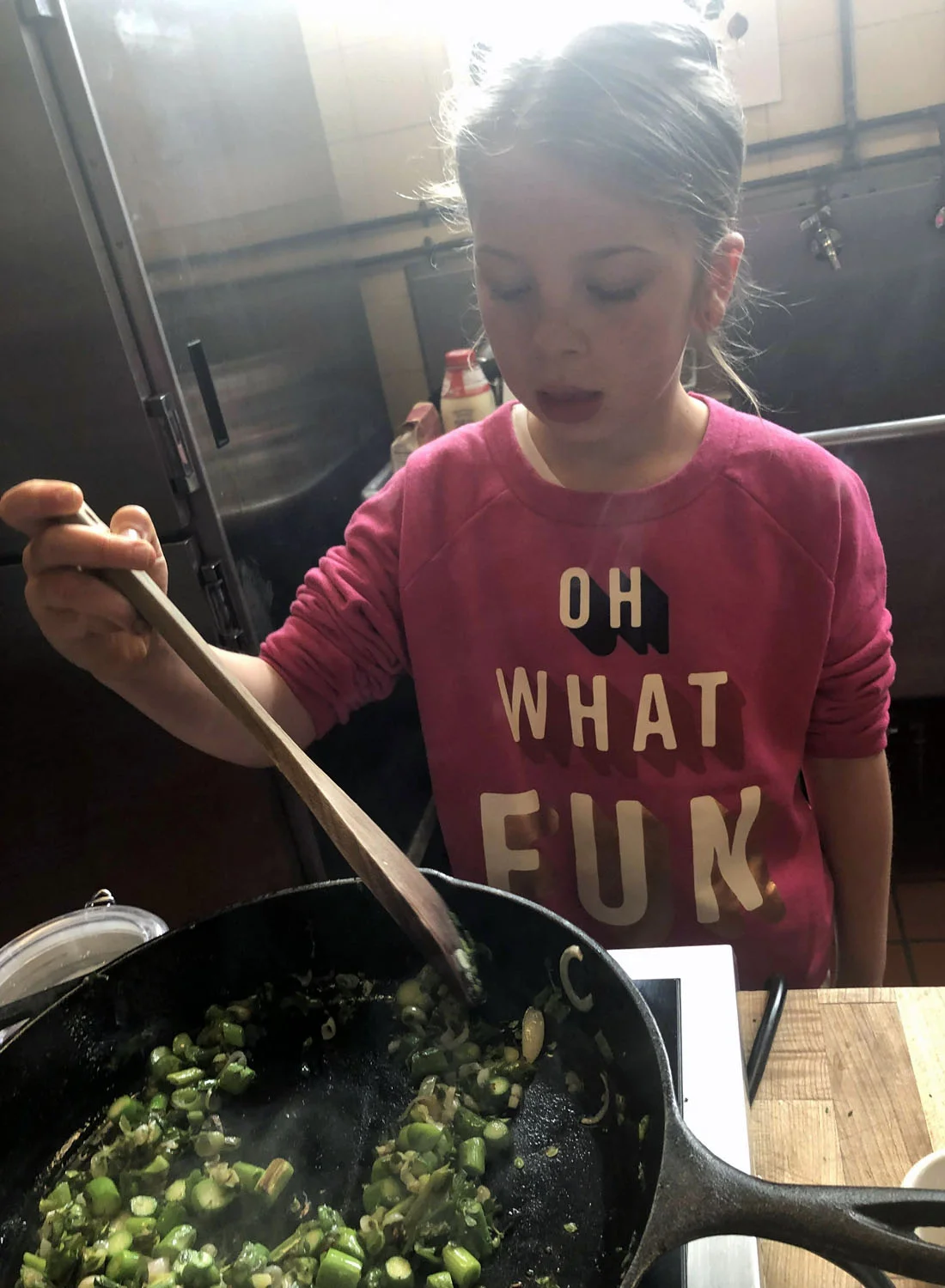
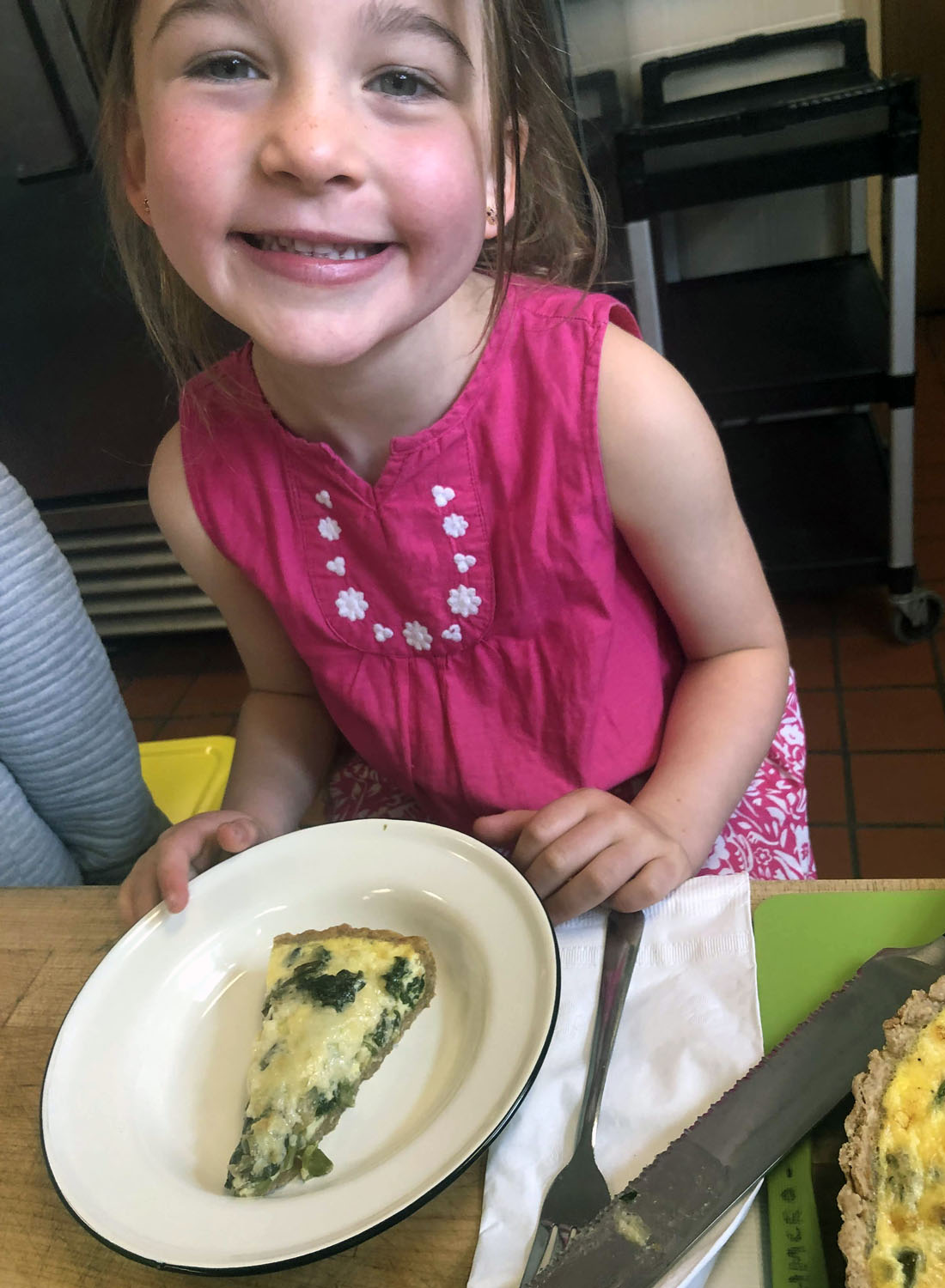
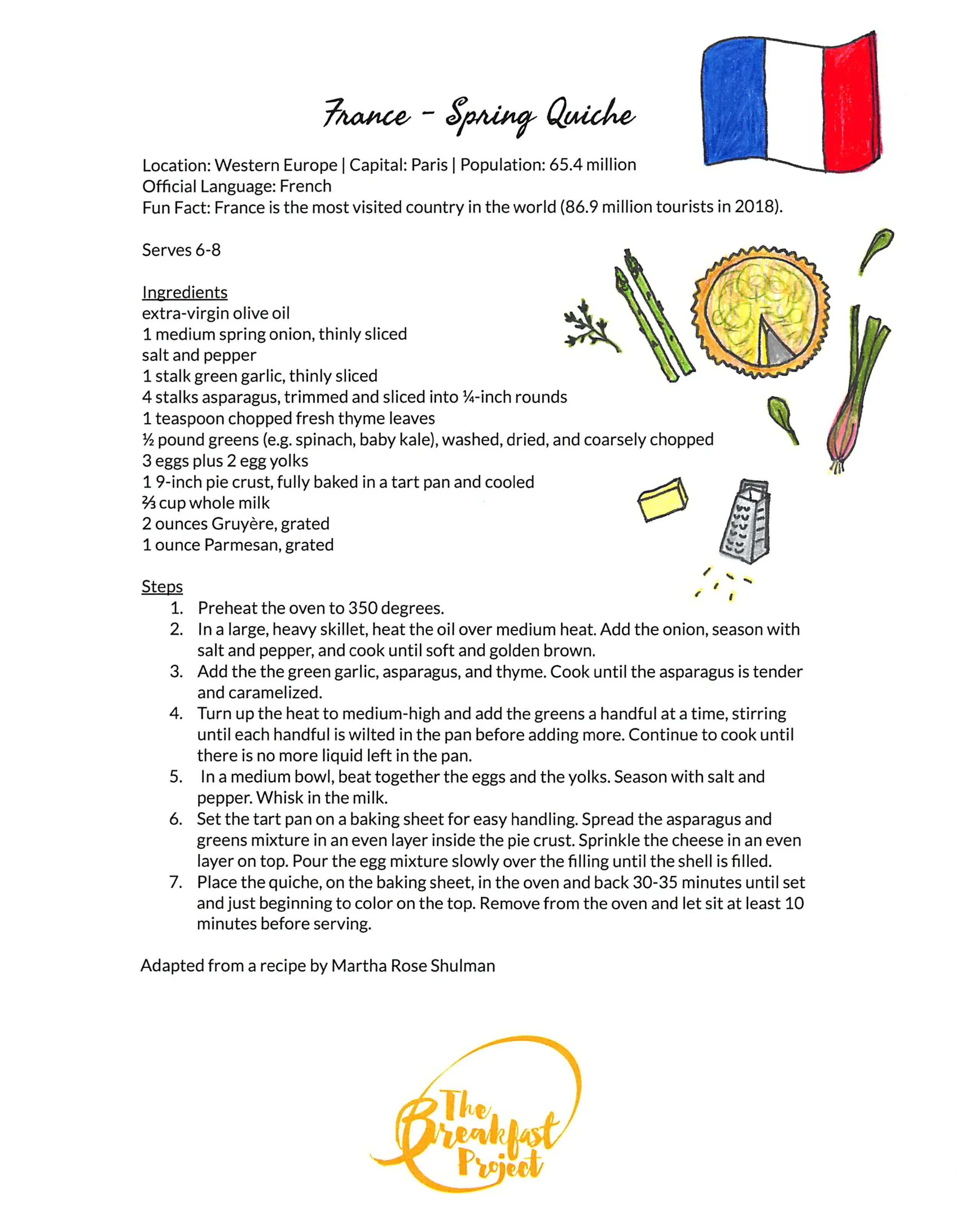
We celebrated some of our favorite springtime ingredients this week - spring onion, green garlic, asparagus, spinach, lemon thyme - with a classic French quiche. Due to the time it requires to make and bake the tart crust, students prepared the vegetables, eggs, and cheese in class but filled a crust made by other students the day before. They also ate quiche made by the class from the day before, which is a practice we recommend even when there aren’t any time constraints because the flavors really have a chance to develop overnight. Thursday’s class baked two quiche that will be served to Harvey Milk staff as part of Staff Appreciation Week!
Blog




Kindergarten Edible Social Studies: Week 1
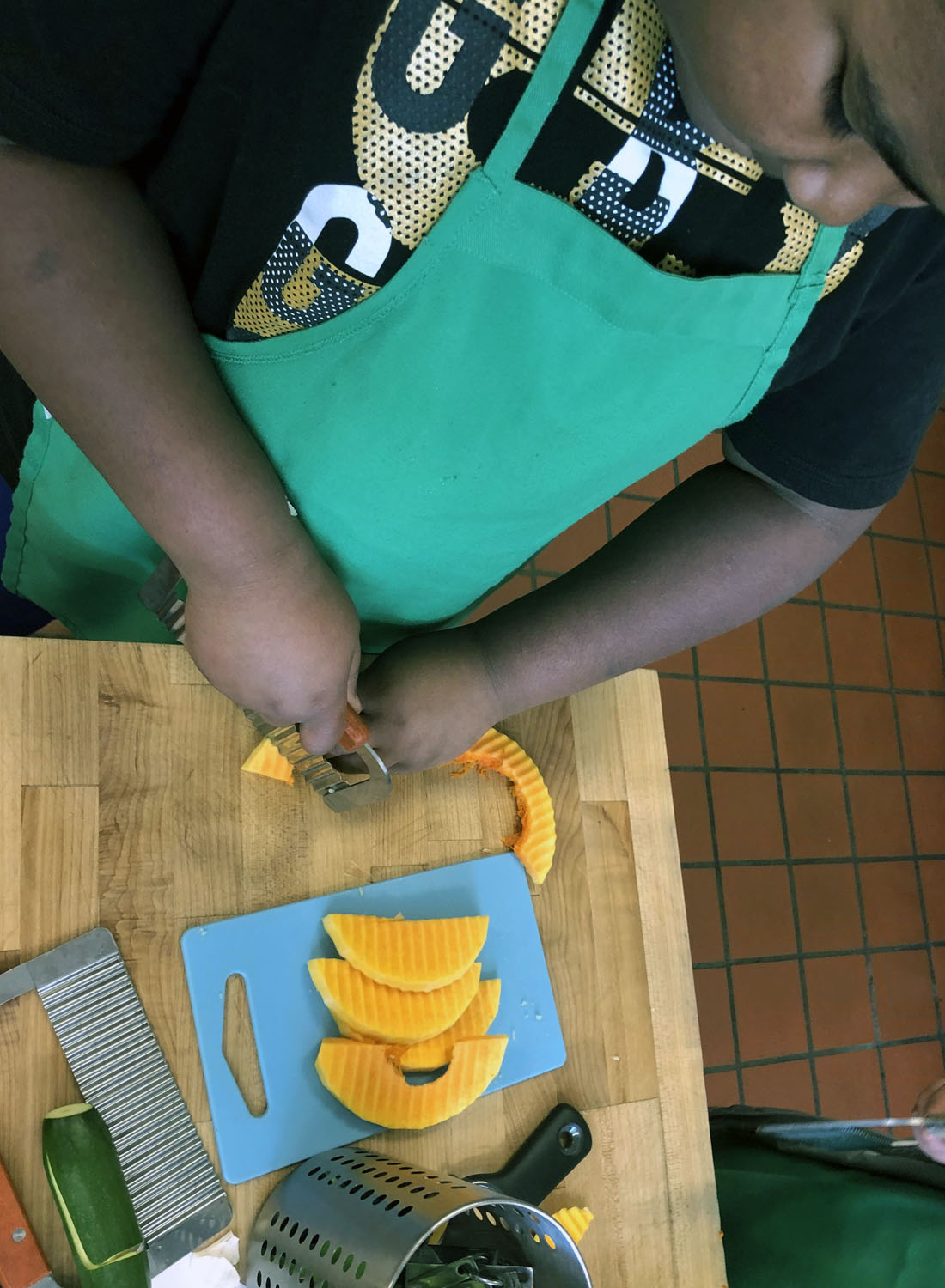
The kindergarteners are such a delight to have in the kitchen! For our first class together, we discussed why it's important to eat a range of colorful fruits and vegetables because each color represents different phytonutrients that help keep our bodies healthy. We made a rainbow fruit salad with strawberries, Gold Nugget mandarins, bananas, kiwis, blueberries, and purple yam (technically a root vegetable, but so beautiful to behold we had to throw it in there).
Tools like the crinkle cutters and nylon knives helped our young chefs gain confidence working with all the ingredients. We really appreciated their incredibly attentive listening and willingness to try new things.


Breakfast Around the World Week 14: Panama
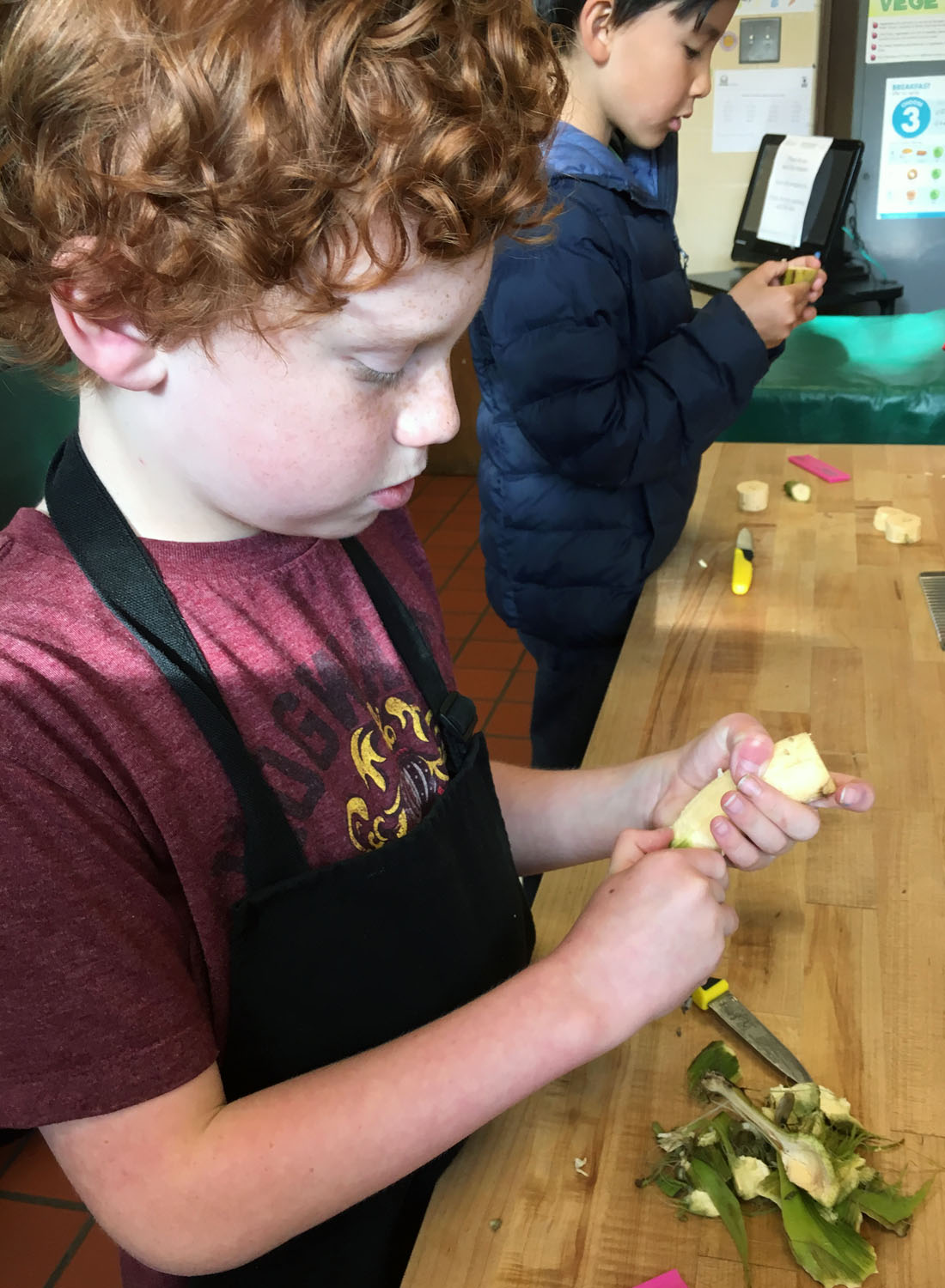
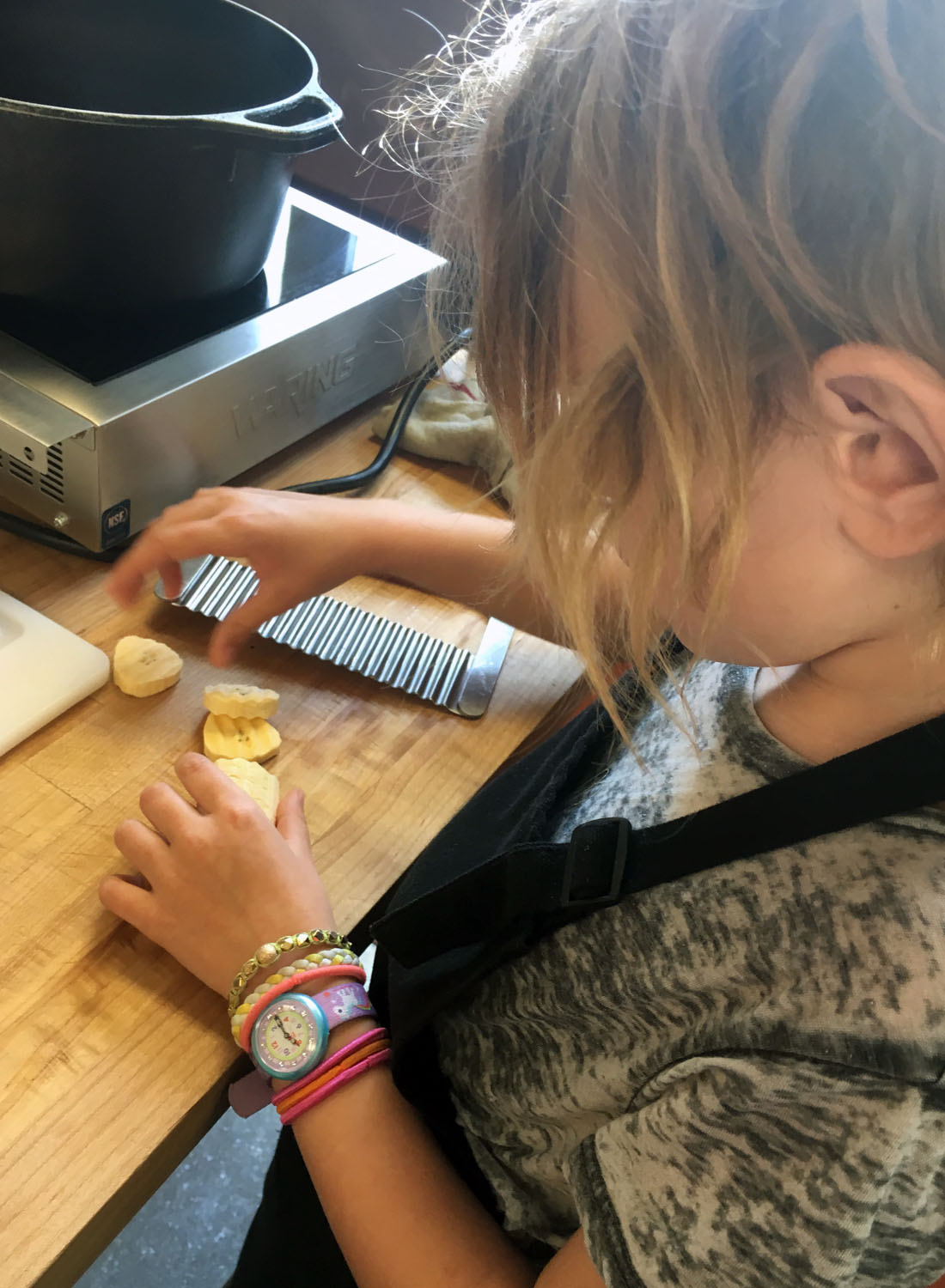
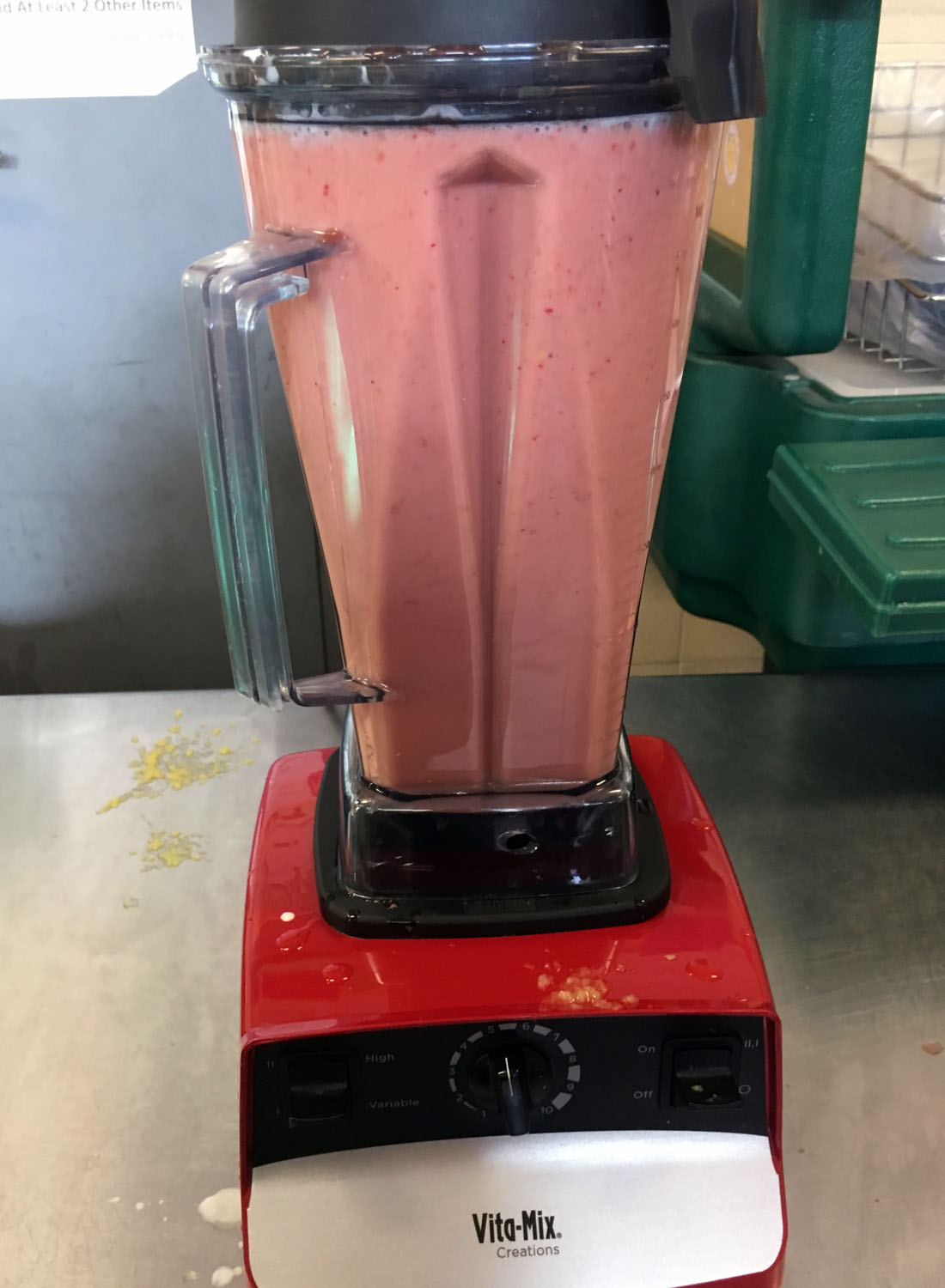
We returned to Central America this week with a fantastic breakfast of fried plantains from Panama, where they are called patacones. (A similar dish is called many other names, including tostones, in other Latin American and Caribbean countries.)
First, students peeled the plantains and sliced them. Then, they fried the slices for a few minutes until they were golden brown. Then, they smashed the plantains with the flat bottom of a bowl to form a pancake shape. Then, they fried the plantains again until the patacones were crispy. All it took was a final sprinkling of salt, a squeeze of lime, and a mango-pineapple-coconut-strawberry licuado to transport us to a tropical locale.




Rock and Rollers: Week 6B
We’ve already posted about the temaki lesson from the last session of Rock and Rollers with grades K-2 this semester, but these photos from our last class with grades 3-5 were too sweet not to post here!


4th/5th Grade Edible Social Studies: Week 3
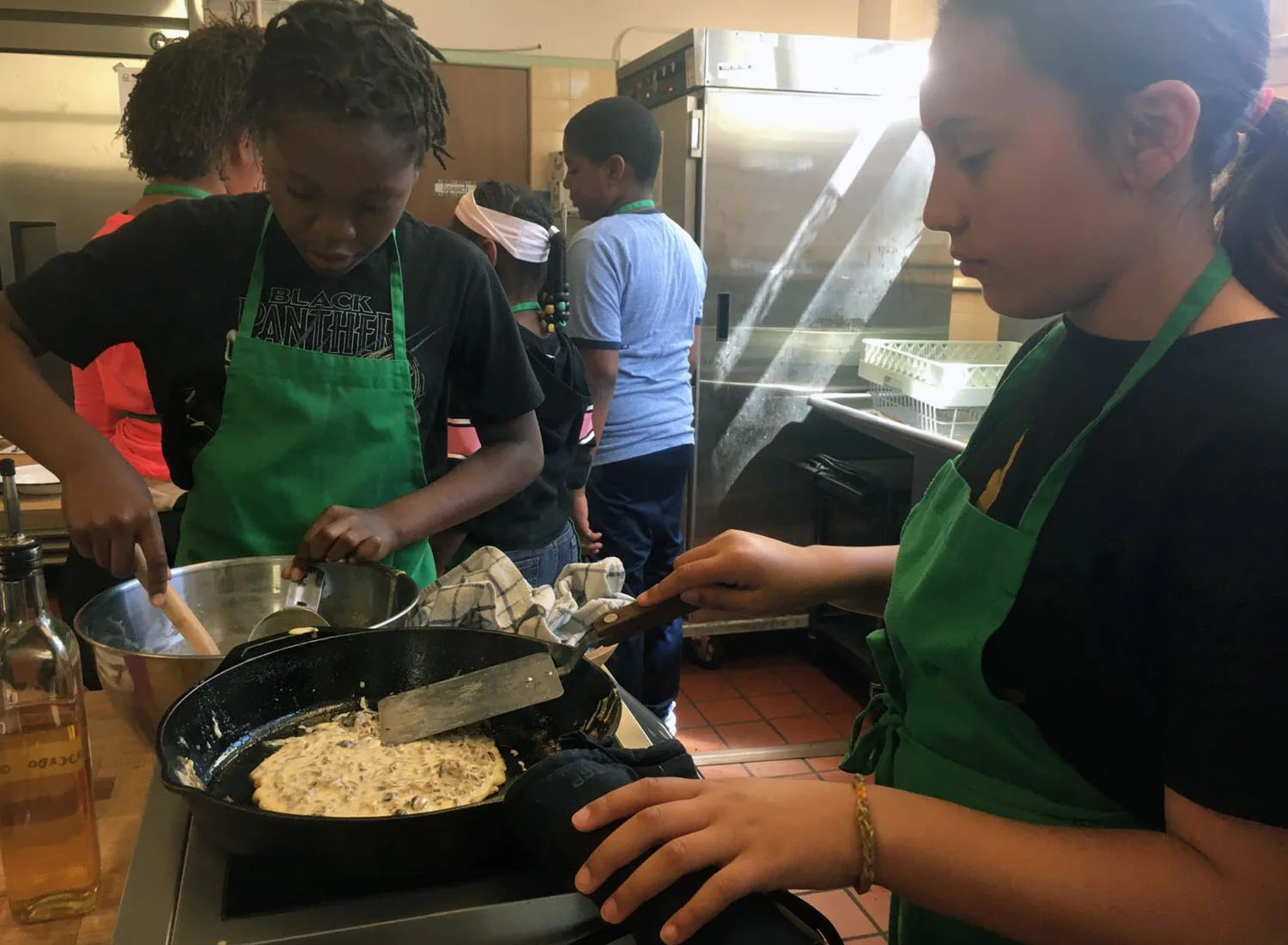
The finale of our three-week unit on Native American food cultures featured wild rice harvested by hand by the Red Lake Nation, a band of Chippewa Indians in Minnesota. We started the class by watching two videos: Food That Grows on Water and White Earth Wild Rice Harvest. The students were impressed at how the Chippewa pole their way through the rice in canoes and how they harvest the wild rice (which are actually grass seeds) with the help of two sticks.
We made a simple pancake batter and incorporated cooked wild rice as well as another ingredient from the Chippewa diet, cranberries. Room 202 made small pancakes and Room 201 made giant ones. All were topped with pure maple syrup, a food Native Americans produced long before Europeans arrived on the continent. We closed the class by going around the circle and sharing a highlight of our time together. We feel so grateful to have shared these brief but meaningful culinary adventures with our graduating fifth graders and look forward to more time in the kitchen classroom next year with the fourth graders!





Breakfast Around the World Week 13: United States
Our students have always asked when we would make a breakfast from the United States, so this week we celebrated one of our country’s indigenous breakfast foods, grits. Grits come from the Native American Muskogee tribe, the people who first ground corn in a stone mill, giving the dish its signature coarse, gritty texture. We compared grits to the oat porridge we cooked from Finland and the rice porridge we cooked from China - all of these food traditions revolve around a thick mixture of cooked grains or seeds served with delicious toppings.
We worked with proper South Carolina stone-ground grits, both yellow and white, cooking them with whole milk and vegetable stock to form a savory base for our meal. Then we shook our own butter, sautéed the first asparagus of the season with garlic, grated cheddar cheese, snipped green onions, diced peppers, cut lemons, and minced parsley. We didn’t even miss the shrimp, and it was fun to hear a couple of kids remark that they would try and eat grits every morning from now on.


4th/5th Grade Edible Social Studies: Week 2
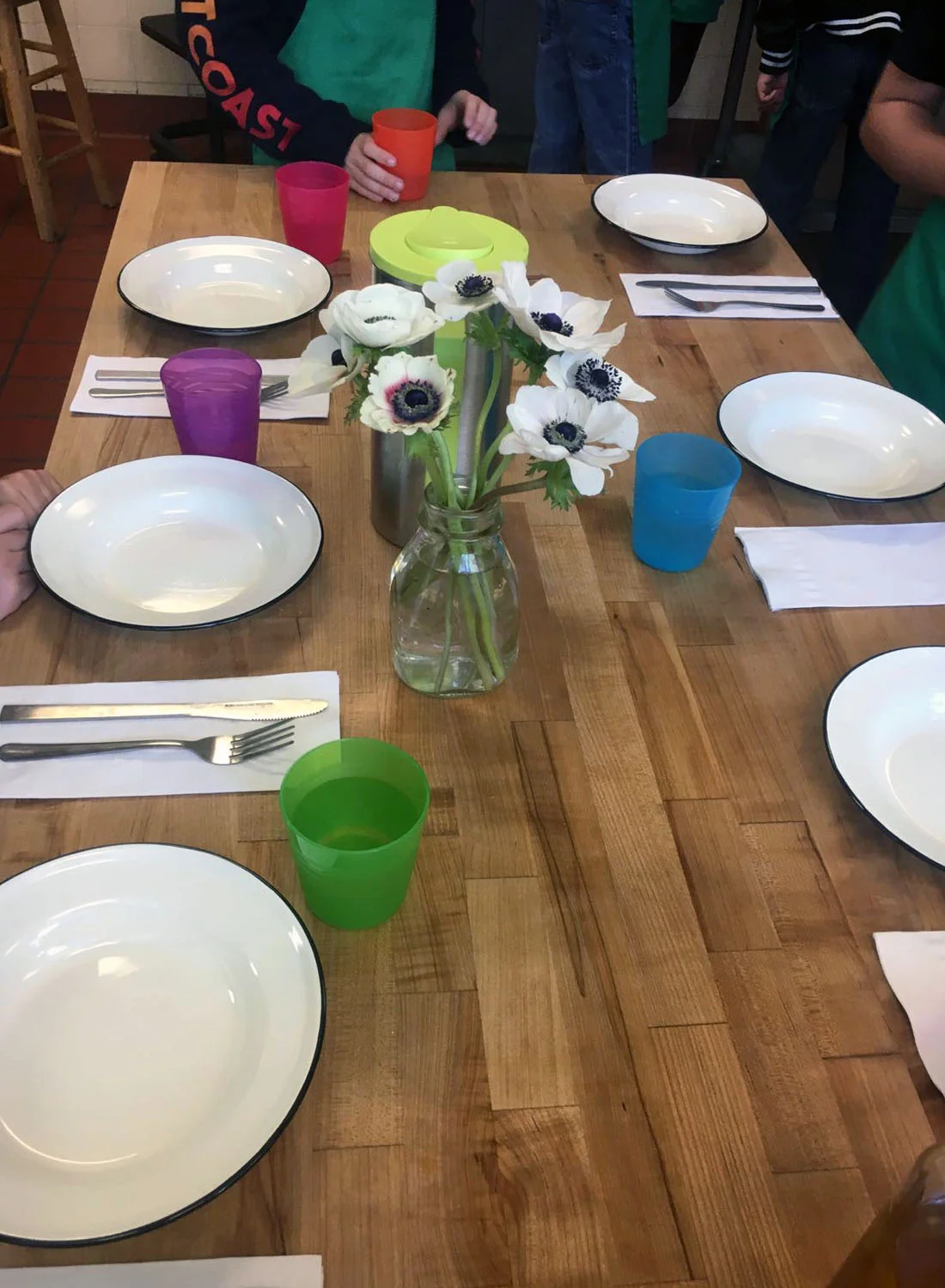
This week, the fourth and fifth graders prepared Three Sisters Stew from the Chickasaw Nation, which today is located in Oklahoma. The Three Sisters refers to the Native American tradition of planting corn, beans, and squash together. The corn provides a structure for the pole beans to climb, the beans provide nitrogen to the other plants, and the squash plant’s low, broad leaves prevent the growth of weeds, provide moisture retention for the soil, and its prickly vines ward off pests. Whereas last week’s class focused on the diet of the Ohlone, who were predominantly hunter gatherers, this week we talked about largely agrarian societies like the Chickasaw. Several Native American tribes developed the Three Sisters method of companion planting over thousands of years.
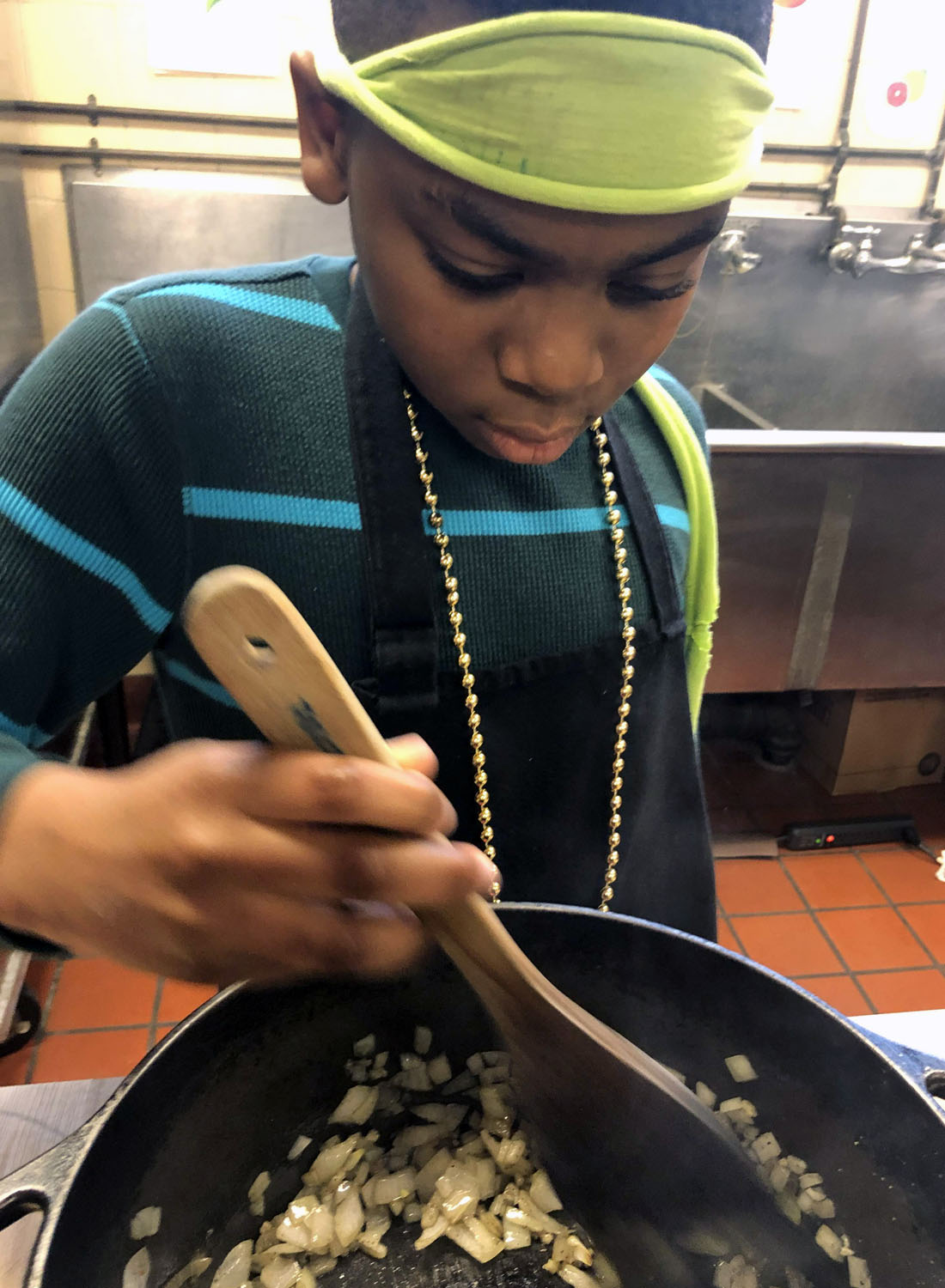
Students started by sautéing onions with freshly minced garlic. They added cut-up summer and winter squash, red potatoes, and pre-cooked Cannellini beans and barley. Our homemade vegetable stock contained beet greens, which gave the stew a beautiful deep red color. While the vegetables were cooking in the stock, we set the table, then garnished the finished stew with fresh herbs from the Harvey Milk school garden. What we love most about the fourth and fifth grade classes is how focused they are on the many kitchen jobs we have and how strong the curricular connections are between what they have studied in the past and what they’re experiencing with all their senses in the kitchen classroom.





Breakfast Around the World Week 12: Tunisia
This week we made shakshouka, a North African breakfast of eggs cooked atop stewed tomatoes and peppers that was a favorite last year when we first taught Breakfast Around the World. We served ours over the national dish of Tunisia, couscous. On Thursday, we had a special visit from Harvey Milk parent Yafah and first grader Lilah, whose family has roots in Morocco. They told us they add jalepeño and lamb sausage to their shakshouka and eat it with French baguette instead of couscous.
Students built the stew by sauteing onions and garlic, adding the tomatoes and peppers, and deepening the flavors with cumin, sweet paprika, and a bit of cayenne for a kick. The final additions were the eggs on top, which our young chefs cracked with confidence. We covered the pan, allowing the yolks to just set, then served the shakshouka over a bed of couscous with the traditional Tunisian pepper paste harissa on the side.


Rock and Rollers: Week 4B
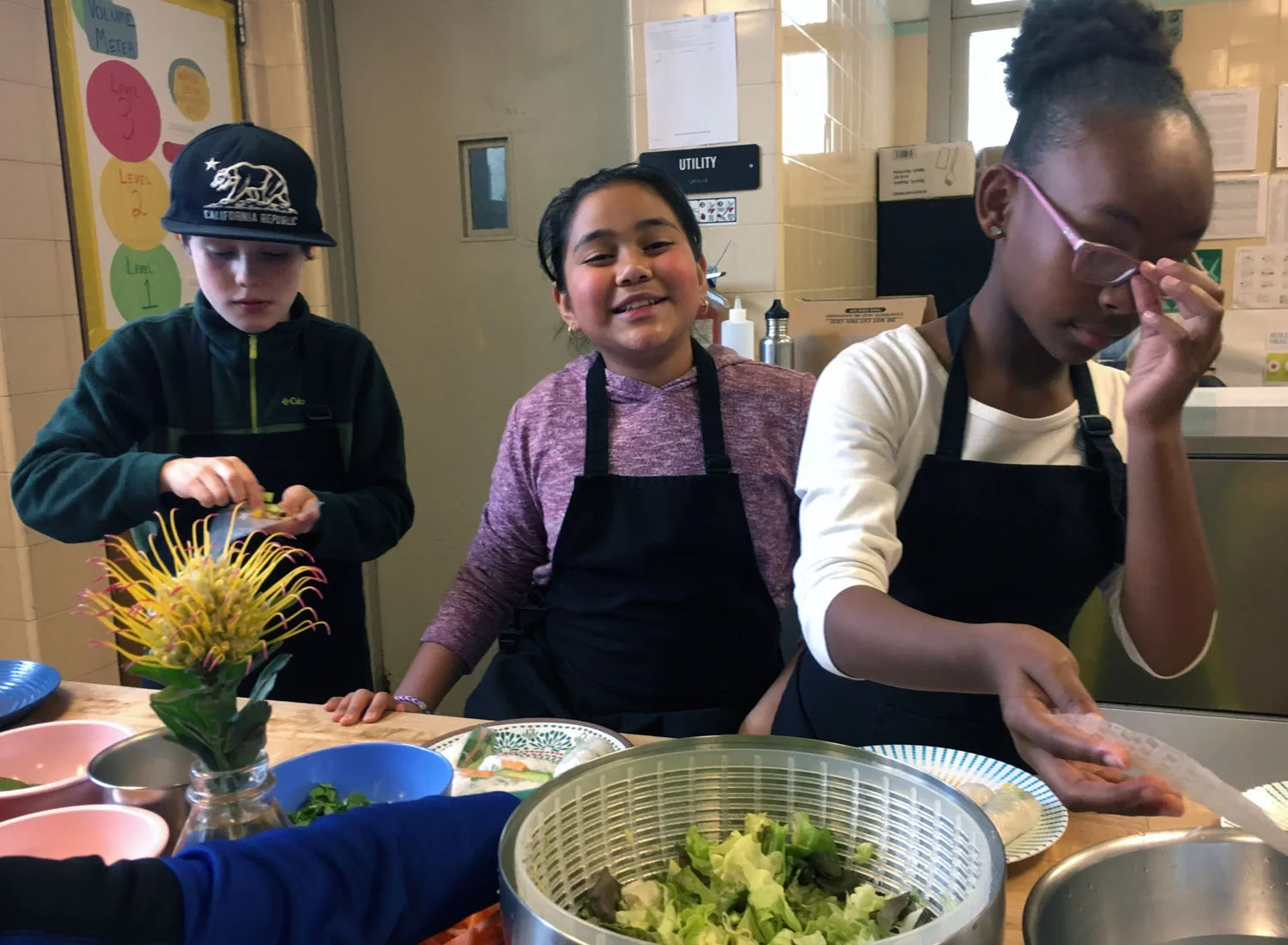
We made fresh summer rolls (gỏi cuốn in Vietnamese) this week that feature edible rice paper for the wrapper. Students prepared lettuce, carrots, cucumbers, mint, basil, cilantro, tofu, and calendula petals for the filling, then dipped the wrappers in water to rehydrate them before rolling. We had some rice noodles tossed in sesame oil as a base, and each of us was able to roll and eat three to four rolls! Some were skeptical of the traditional nước mắm dipping sauce until they tasted it. Then they couldn’t get enough of the salty, sweet, acidic condiment.
Technical difficulties prevented us from listening to Vietnamese rock band Bức Tường, but luckily our chefs happen to be excellent conversationalists. After school is one of our favorite times with the kids because they are so witty, relaxed, and enthusiastic about the work.




4th/5th Grade Edible Social Studies: Week 1
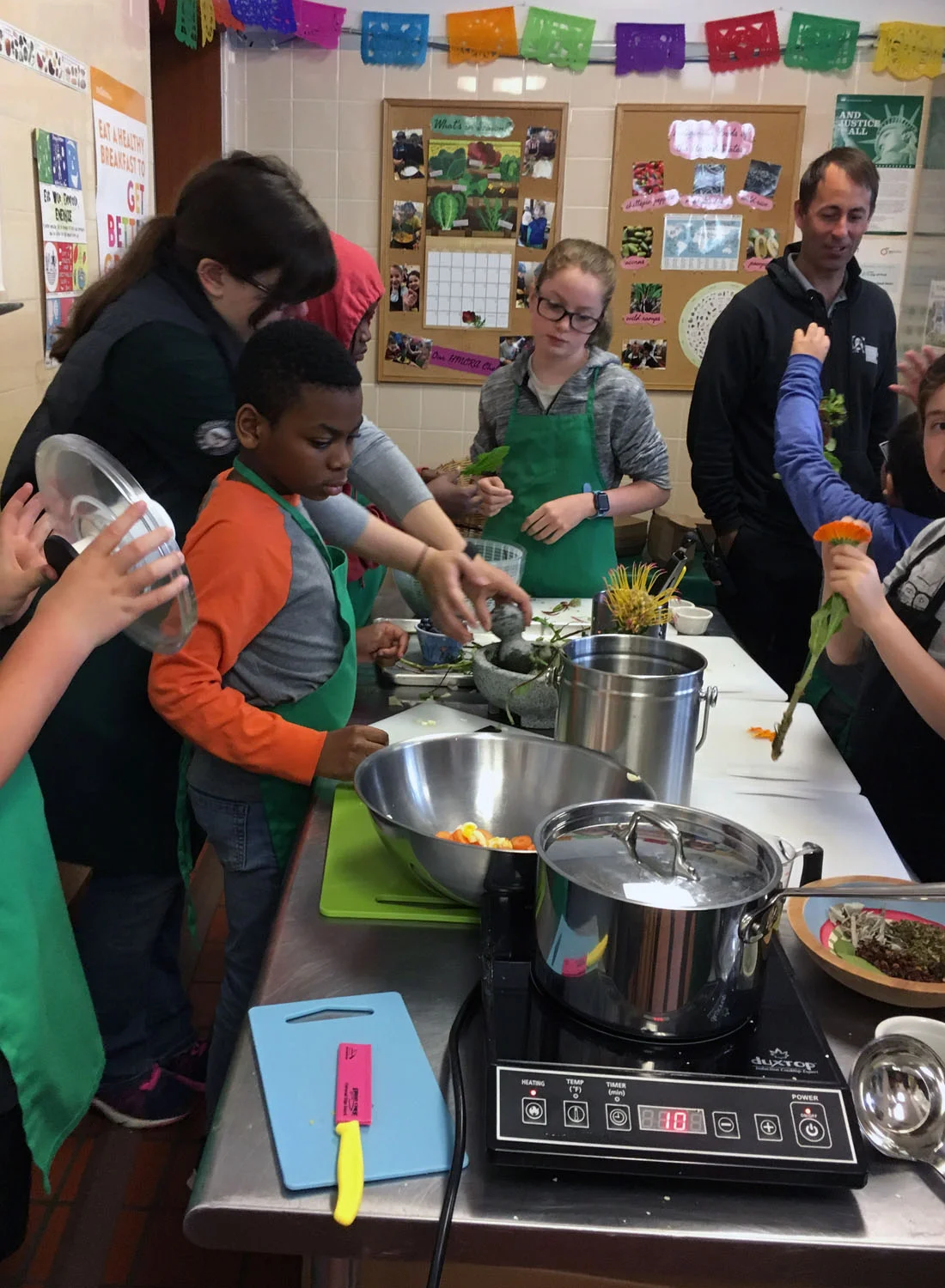
We had a wonderful start to our fourth-and-fifth-grade unit on Native American food traditions and food culture this week. We started in the classroom where students shared what they knew and questions they had about the Ohlone, the native peoples of the San Francisco Bay Area. What did they eat? What did their languages sound like? How many tribes were there? We then watched a video about two Ohlone chefs who are keeping indigenous food traditions alive at their cafe in Berkeley. (We are working with their organization to arrange a visit to Harvey Milk later this spring!) One takeaway that many of us found powerful about the video is that the Ohlone are still here, still gathering together, still a part of our modern-day local community.
In the kitchen, students brewed a tea made with rose hips, yerba buena, white sage, bay laurel, and local blackberry honey. They washed dandelion, sorrel, and watercress, and made a salad with ingredients Ohlone people would have foraged: quail eggs, edible flowers, edible roots, and seeds. Using a mortar and pestle, we made a simple dressing of sorrel, onion, honey, and oil. At our closing circle, students shared that the salad and tea both reminded them of the foods we still eat today and struck them as different from our modern-day diet. One chef remarked that the Ohlone ate “delicious nature food.”




Breakfast Around the World Week 11: China
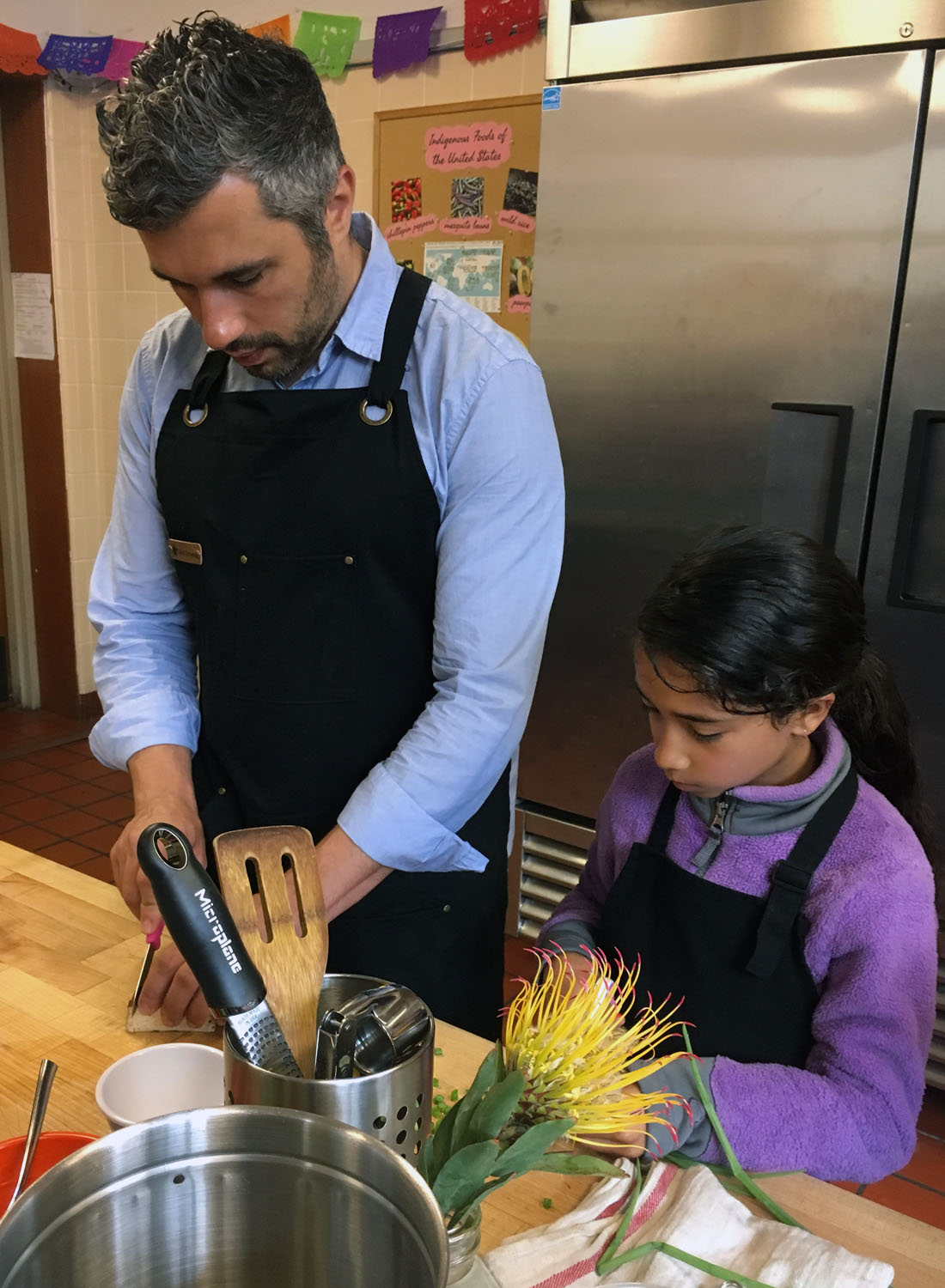
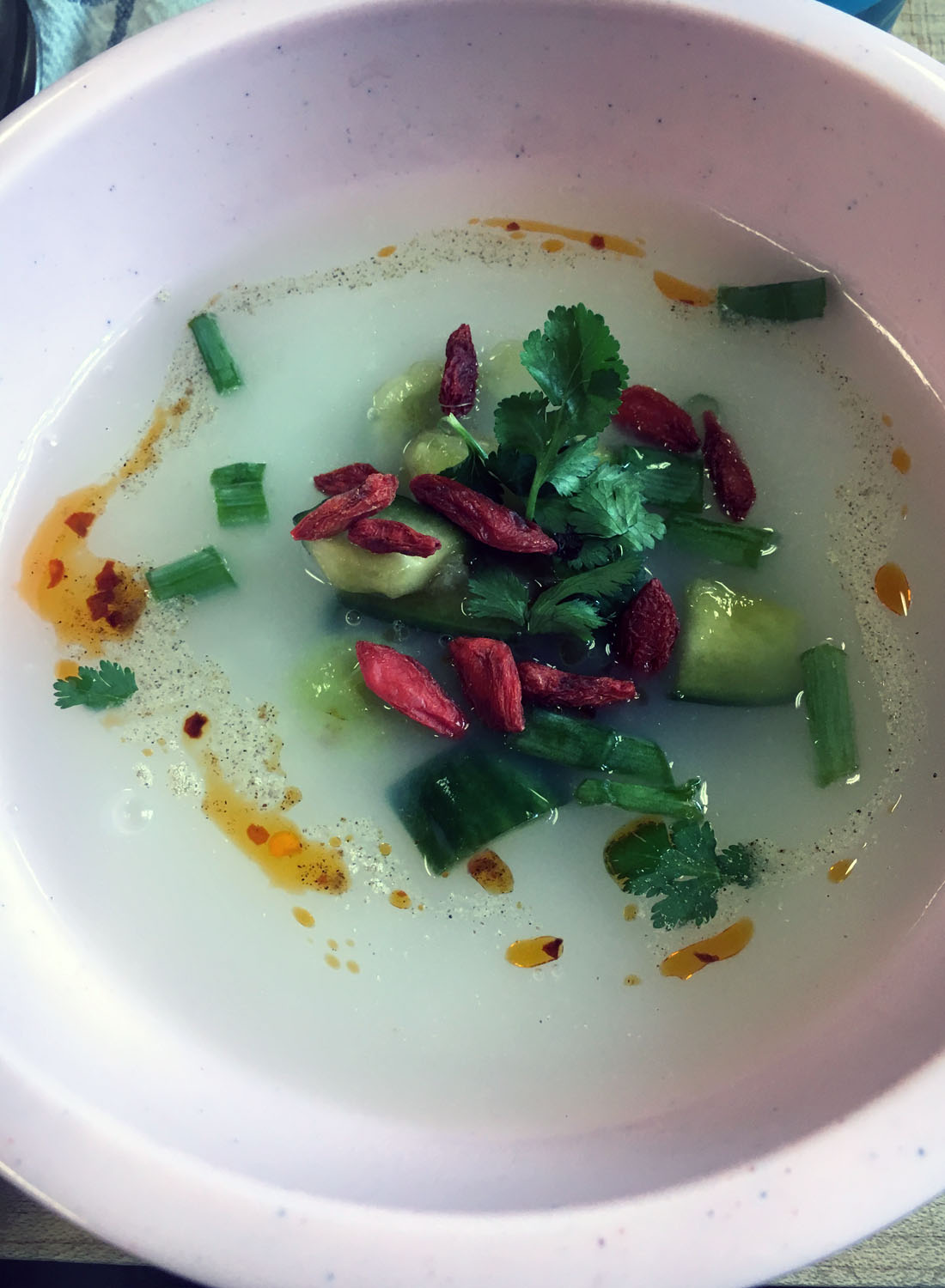
It was fun to get back into action this week after the spring break. We made a traditional breakfast from China that has many names: zhou and xifan in Mandarin, jook in Cantonese, and congee, which comes from a Tamil word. I grew up eating xifan every Saturday morning when my grandmother would cook all the leftover rice from the week into a hot porridge that we ate with cucumber pickles, pickled mustard, and a dried pork product the internet tells me is called “pork floss” or “meat wool” in English. The students would have inevitably laughed a lot if I had known to share this with them!
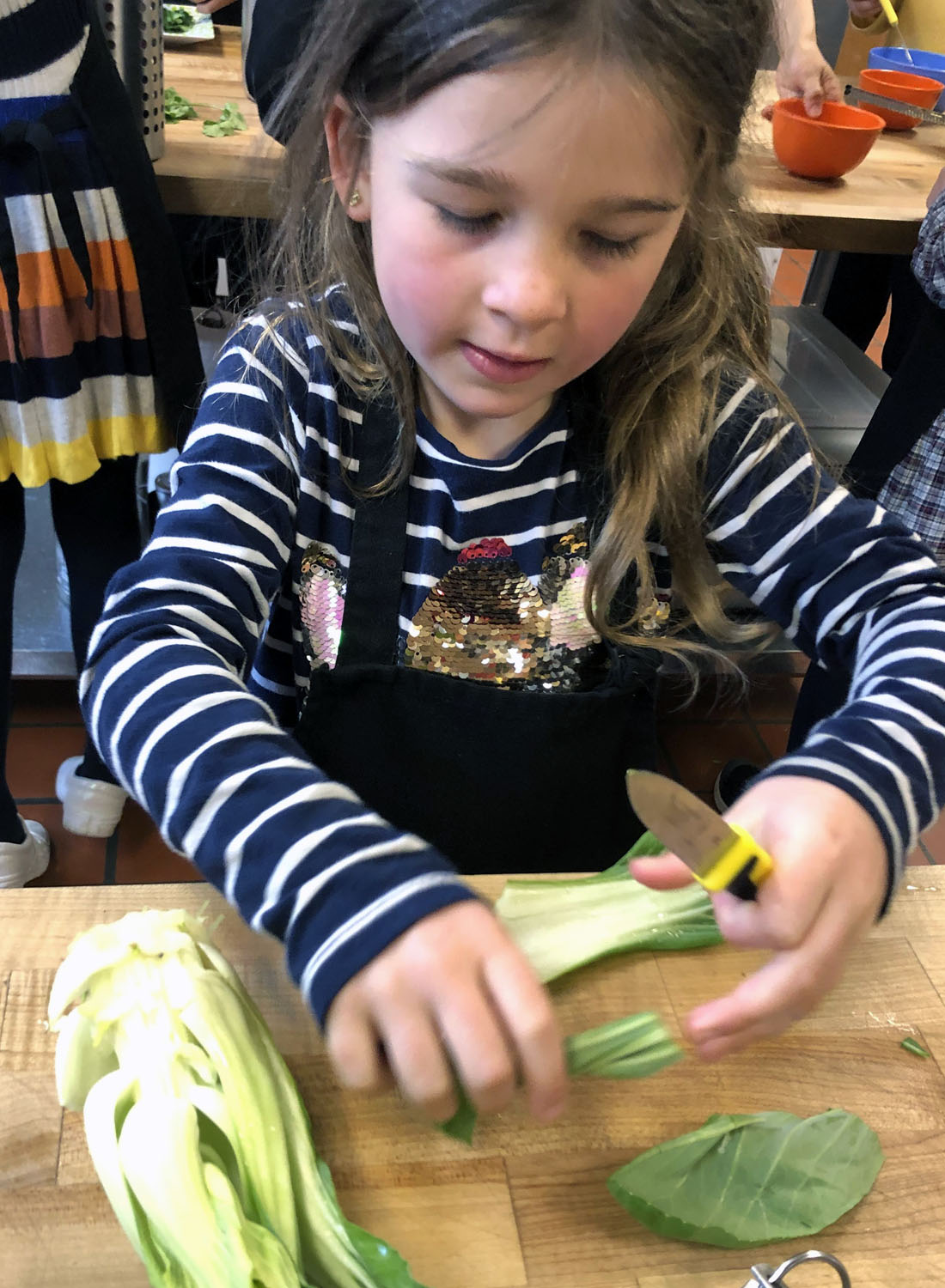
The zhou is very easy to make, but plan ahead as the porridge takes time to break down and develop the desired ratio of rice to water. We had the pot going by 8am when the kids arrived, so they got to work on various toppings to serve with the porridge when it was ready. They stir-fried bok choy with garlic and ginger in our new cast-iron woks (thank you, District 8 participatory budgeting process!), made cucumber pickles for the next day’s class, chopped braised tofu, grated ginger, plucked cilantro leaves, and sliced green onion. We also had goji berries, white pepper, sesame oil, soy sauce, and chili oil as garnishes. No two bowls were the same when we sat down to enjoy the meal together.






2nd Grade Edible Social Studies: Week 9
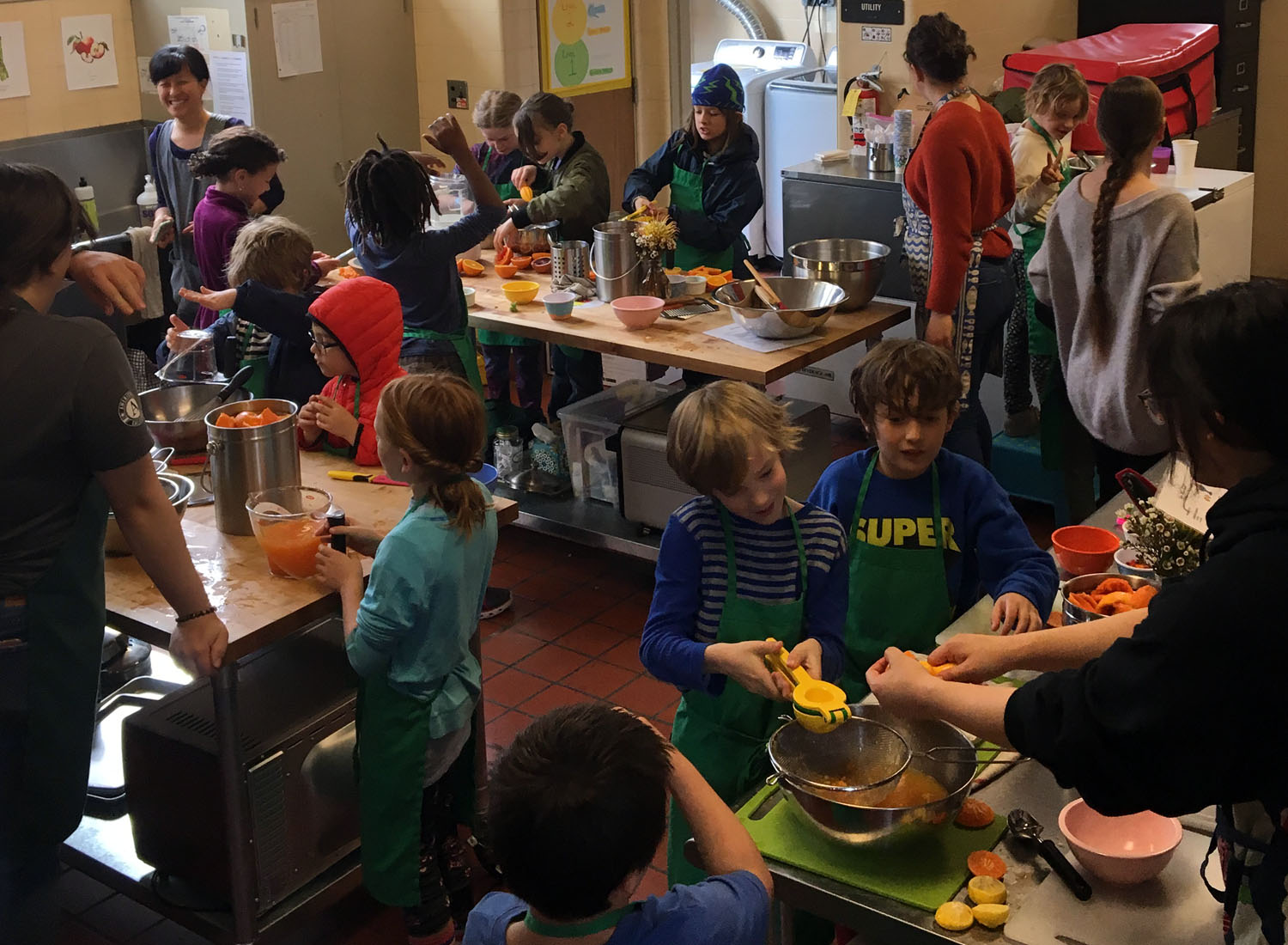
For our last class with the second graders for the semester, we talked about the history of flavored ice, which dates back 5000 years, and watched a video about food waste and what we can do about it. Our final recipe, “ugly” citrus sorbet, brought together many of the concepts we’ve been exploring over the past nine weeks. Wednesday was the vernal equinox and the first day of spring, so we used the bounty of the winter season one last time. Making sorbet incorporates two forms of food preservation: sugaring and freezing. All the citrus the students worked with came from local farms. The citrus was labeled “ugly” even though it tasted delicious and provided the same nutritional value as more expensive, traditionally beautiful fruit. By participating in a local food system that supports farmers, we help reduce waste and continue to advocate for healthful food to be accessible to all members of our community.
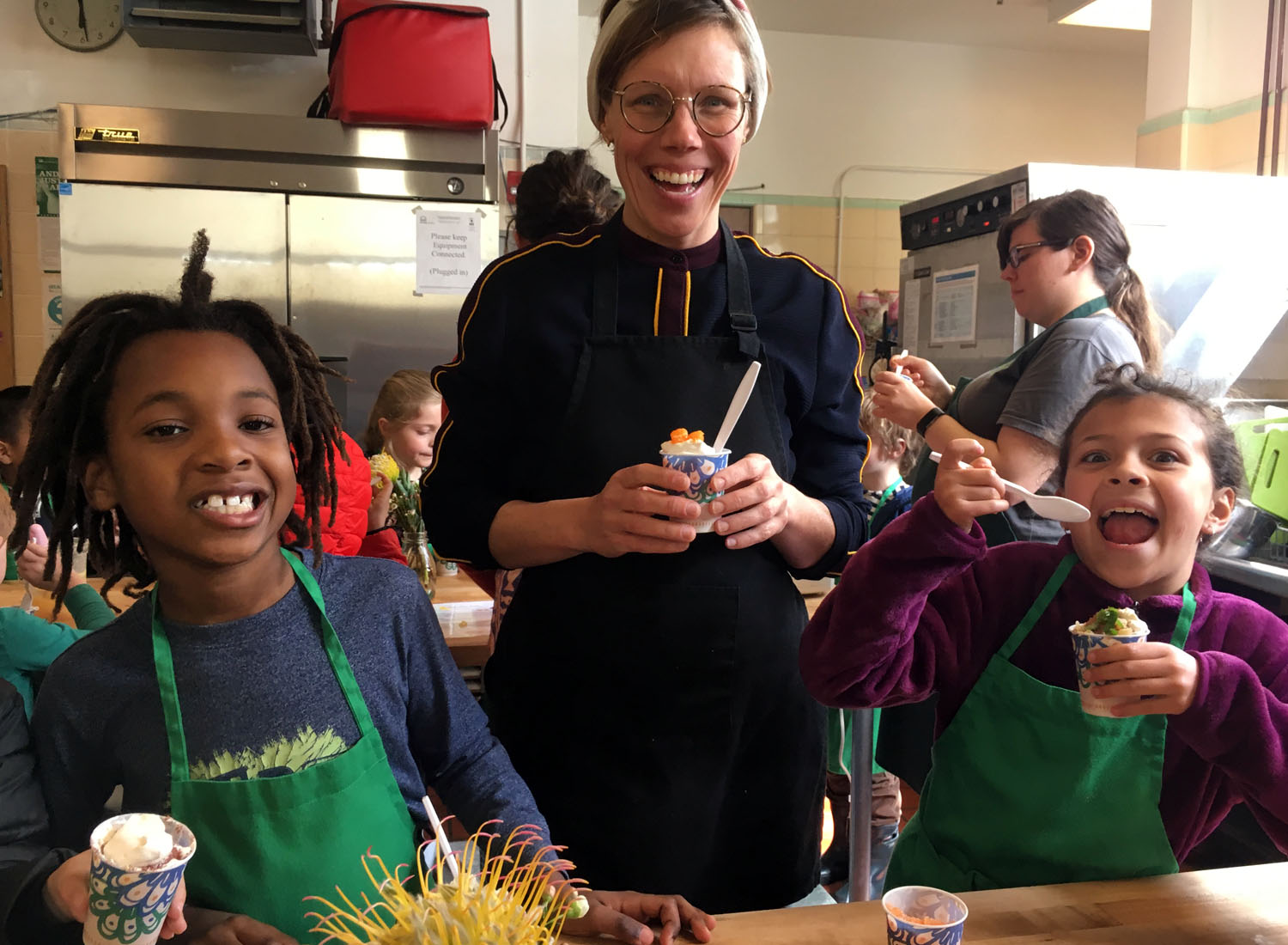
The students combined the juice of several varieties of citrus with salt, simple syrup, and corn syrup. We then froze the sorbet in ice cream makers while we made our toppings: freshly whipped cream, shaved local Guittard chocolate, ribbons of fresh spearmint, Tango tangerine pieces, and chopped candied ginger. The class didn’t allow for enough time to eat the same sorbet we made, so Ms. Katie and I made sorbet for Ms. Reynold’s class, Ms. Reynold’s class made sorbet for Ms. Butler’s class, and we will serve the sorbet Ms. Butler’s class made at the PFC meeting on April 9th.
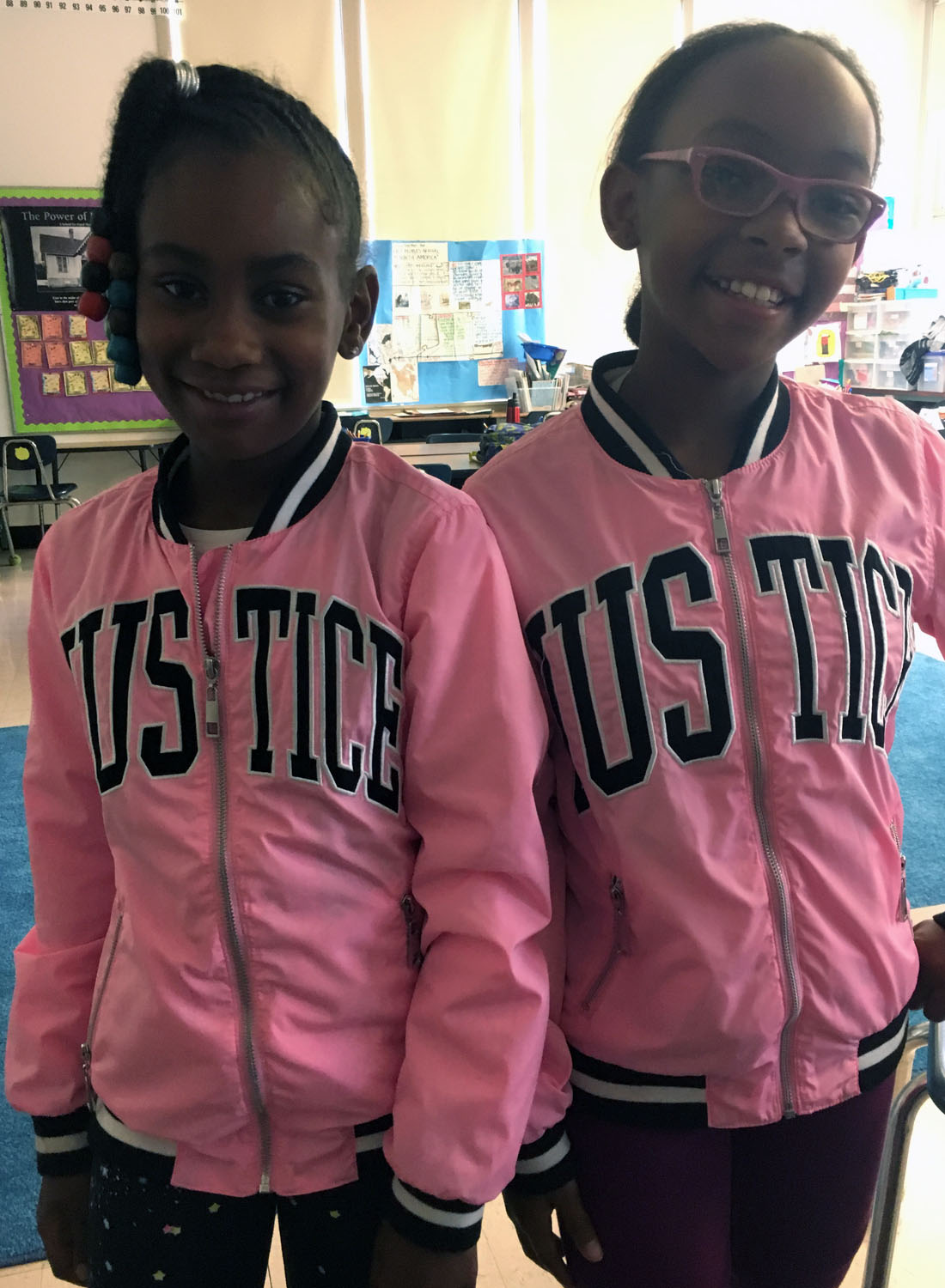
It’s enough just to look at all the smiling faces below. See you next year, second graders!





Breakfast Around the World Week 10: Venezuela and Peru
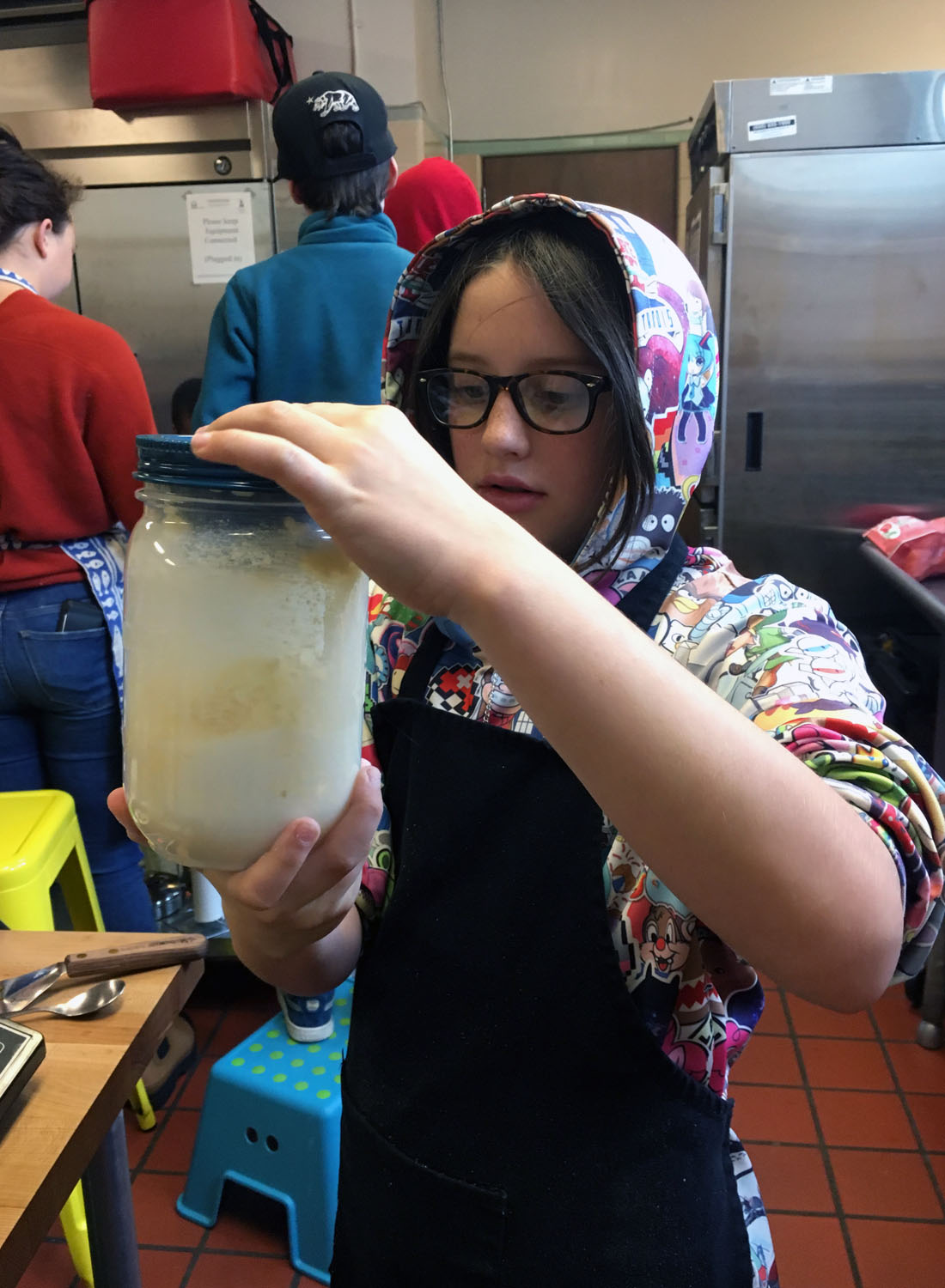
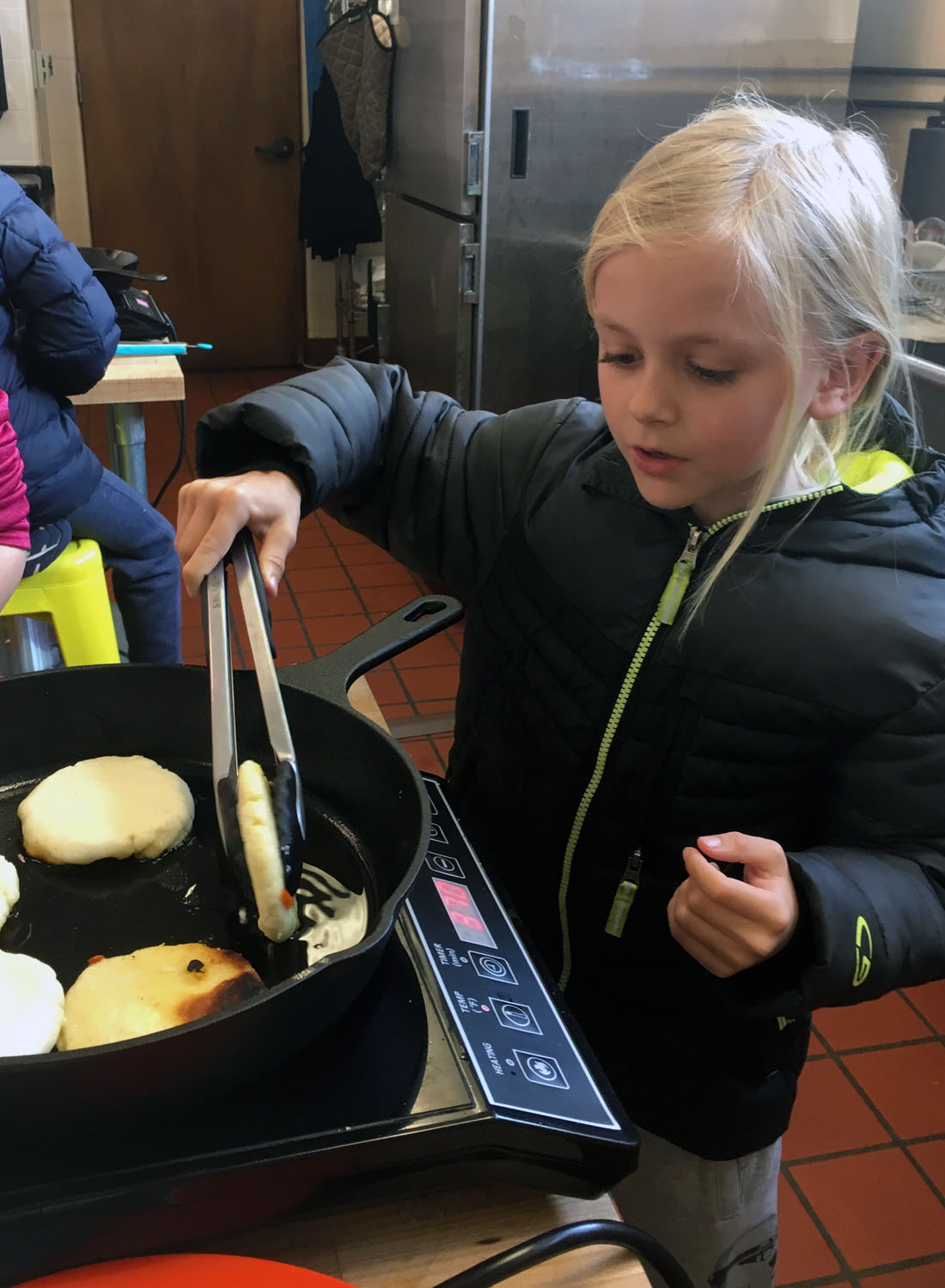
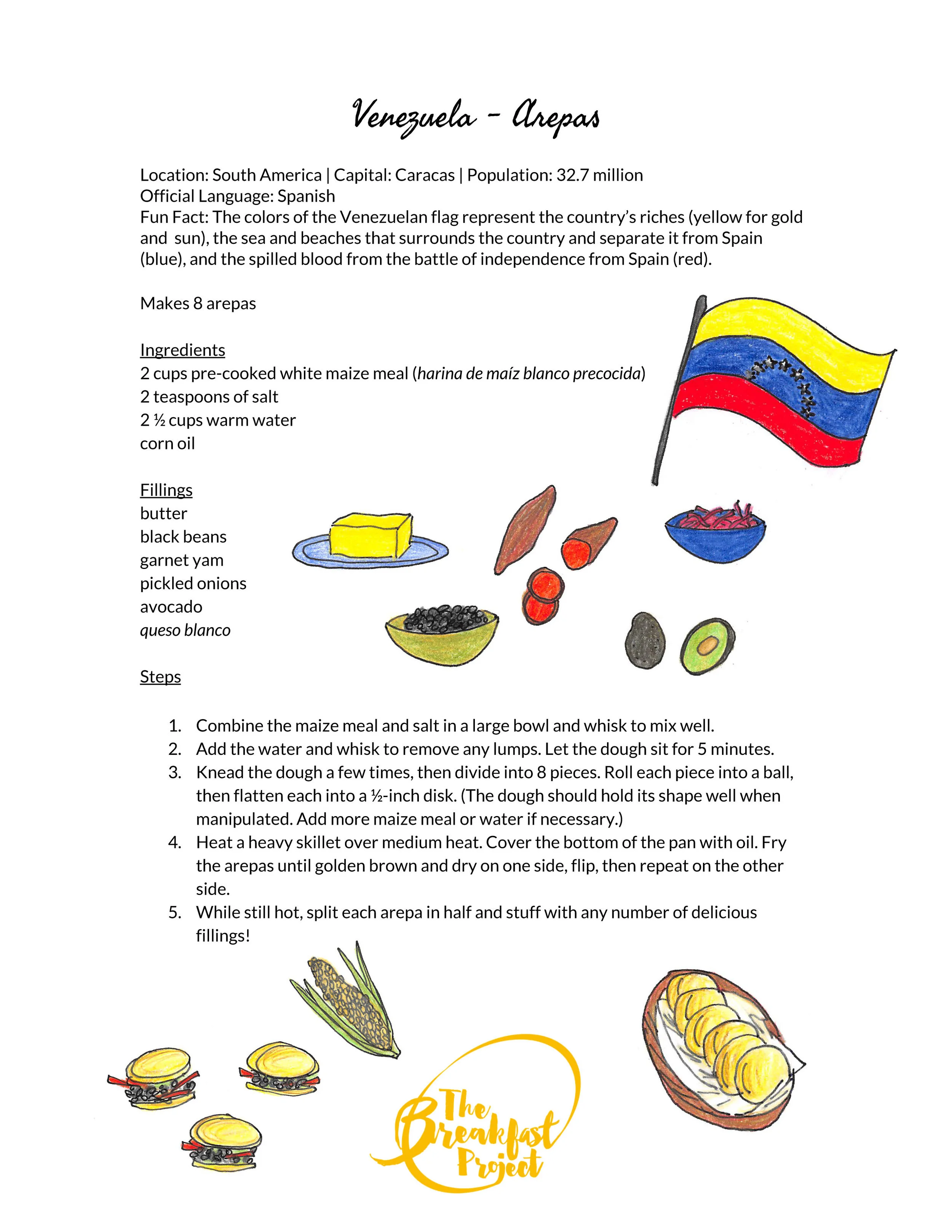
We made a breakfast dish from South America this week called arepas. These flat corn cakes originated during the Pre-Columbian era and continue to be popular in present-day Venezuela and Colombia. The dough is a simple mixture of pre-cooked corn meal, salt, and water. The students had a lot of fun forming the dough into balls and then flattening the arepas by hand. We were lucky to have a special guest on Tuesday and Thursday, Ms. Janette, who is Peruvian and taught us how to make a delicious drink called chicha morada from purple corn, limes, sugar, and a few spices.
As accompaniments to the arepas, students made their own butter, sautéd sweet potatoes, and crumbled fresh cheese. We slathered the cakes with the butter and ate them with beans, the sweet potatoes, the cheese, and pickled onions. The savory arepas paired so nicely with the sweet and slightly spicy chica. We’ll be serving more chica made by Janette at our spring event, so get your tickets now!





2nd Grade Edible Social Studies: Week 8
We started class this week with a mix and mingle activity. Students moved around the classroom while listening to excerpts from Vivaldi’s The Four Seasons and were asked to share with a partner their thoughts about winter, the season we are leaving behind, and what they’re looking forward to about spring, which is just around the corner. Epic second-grade ballet and air guitar ensued. Then we watched a video about how different cities around the world celebrate spring.
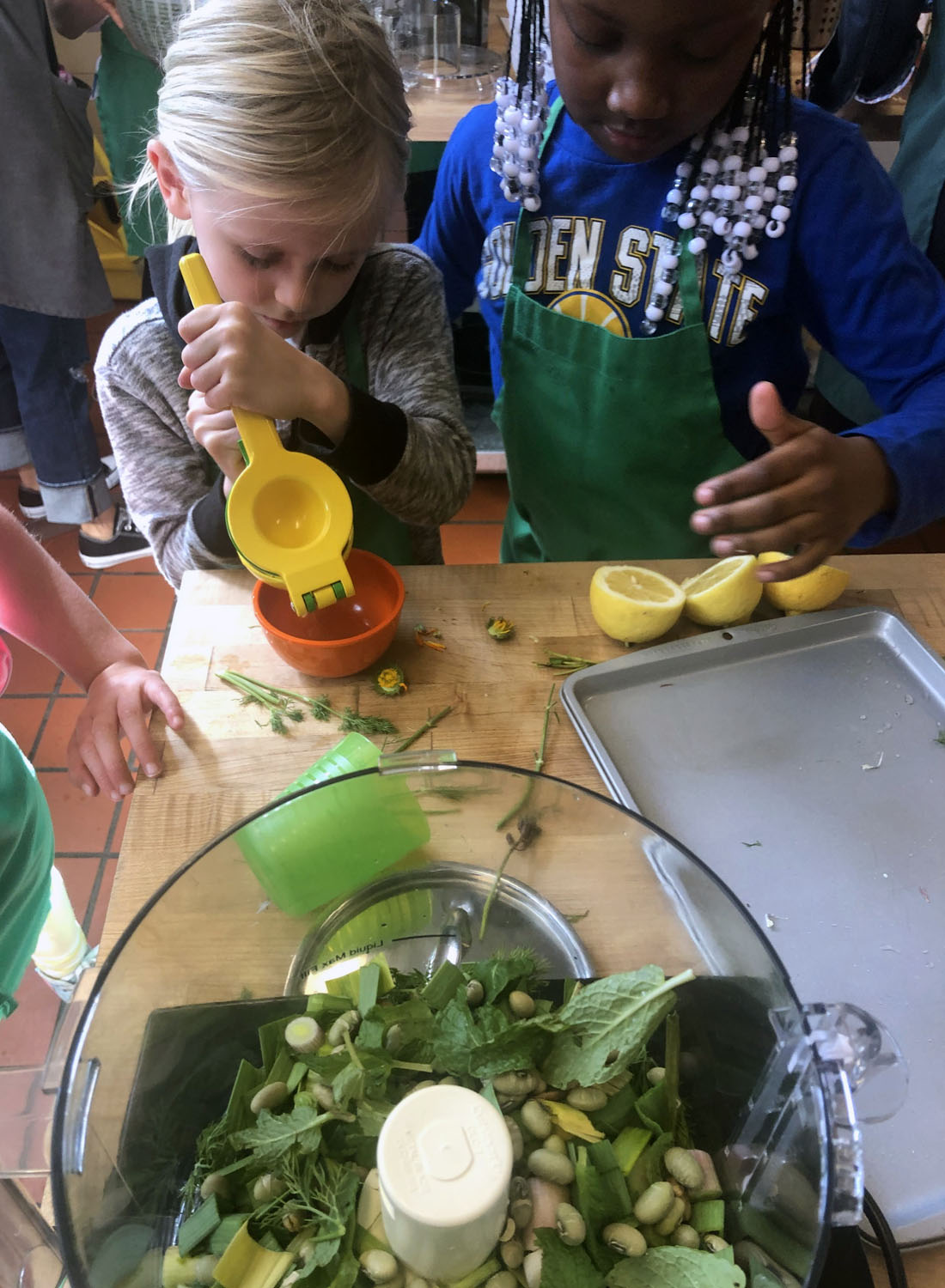
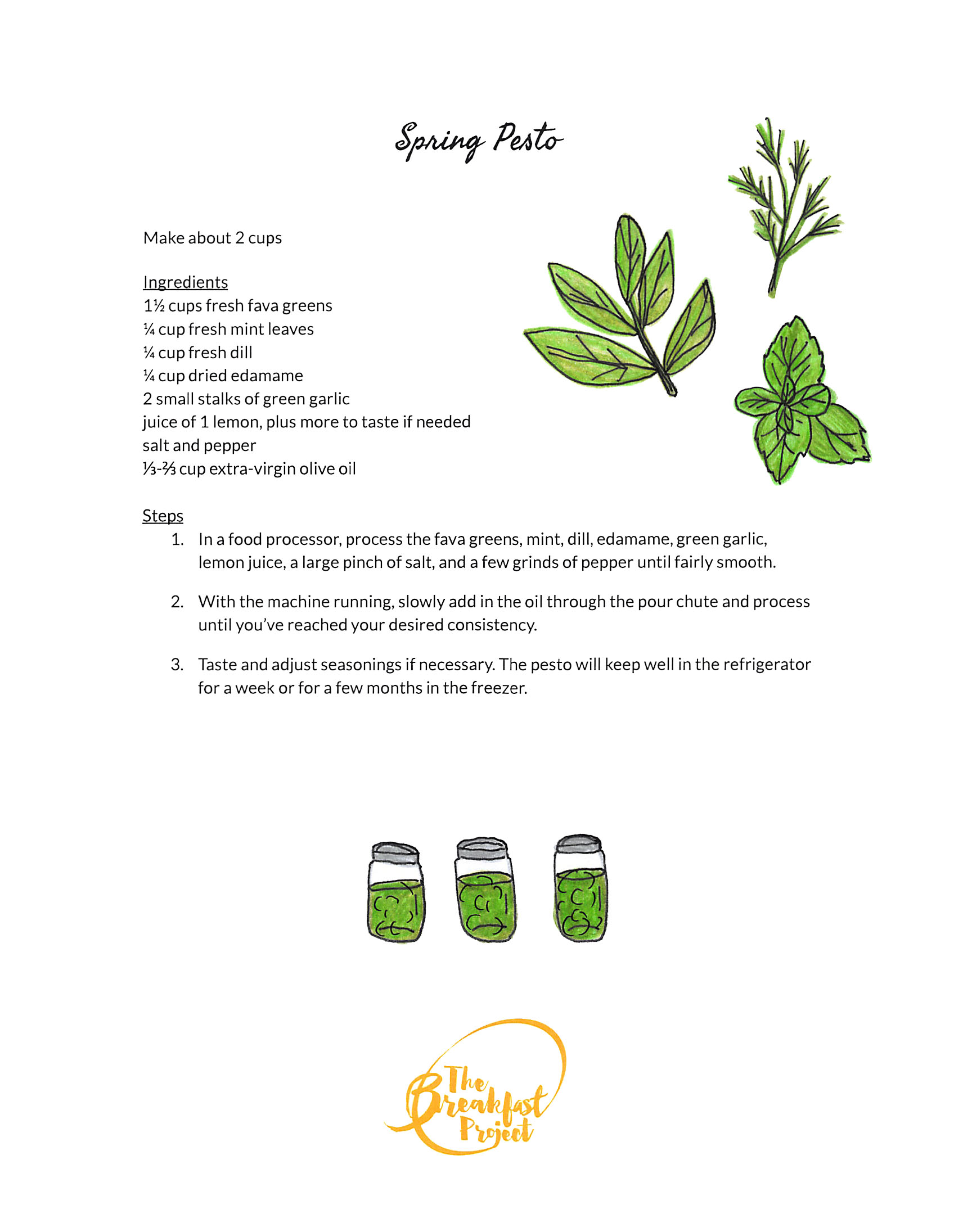
In the kitchen, students got to work with the new salad spinners and food processors The Breakfast Project recently acquired with the District 8 participatory budgeting money we won last year. The food processor bowls filled with fresh spring goodies like green garlic, fava leaves, mint, and dill. Instead of the pine nuts traditionally used in a pesto recipe, we used dried edamame. Second graders added a little lemon juice, salt, and pepper, then processed away while drizzling in extra-virgin olive oil. We tasted as a table and adjusted the seasonings, then slathered the bright green pesto on some Tartine sesame bread and topped it with the winter refrigerator pickles we made last week. A final dusting of edible (Brassica!) flower petals from the school garden and some Parmigiano Reggiano cheese completed these mini edible works of art. Spring is definitely in the air!




Breakfast Around the World Week 9: Greece
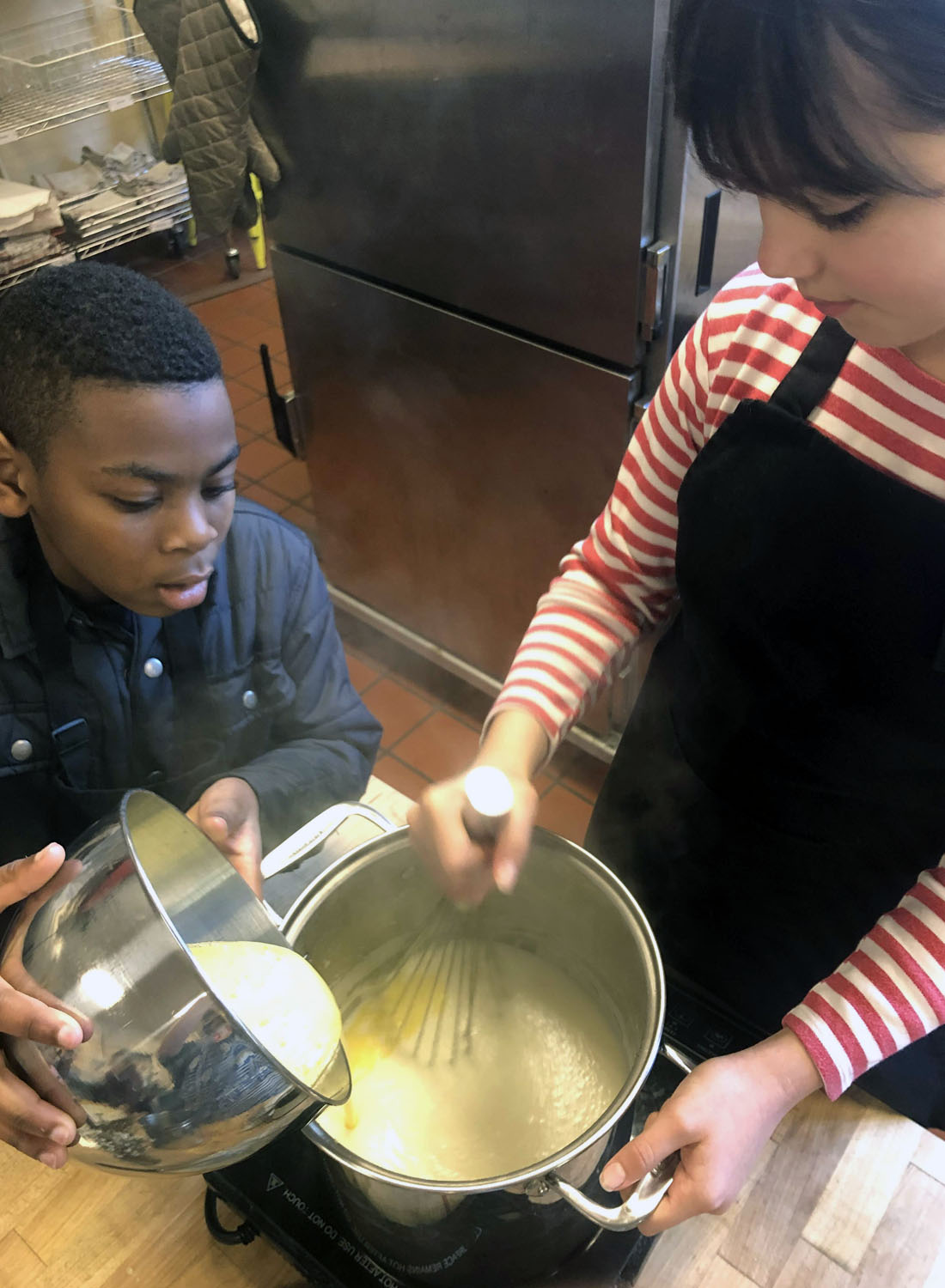
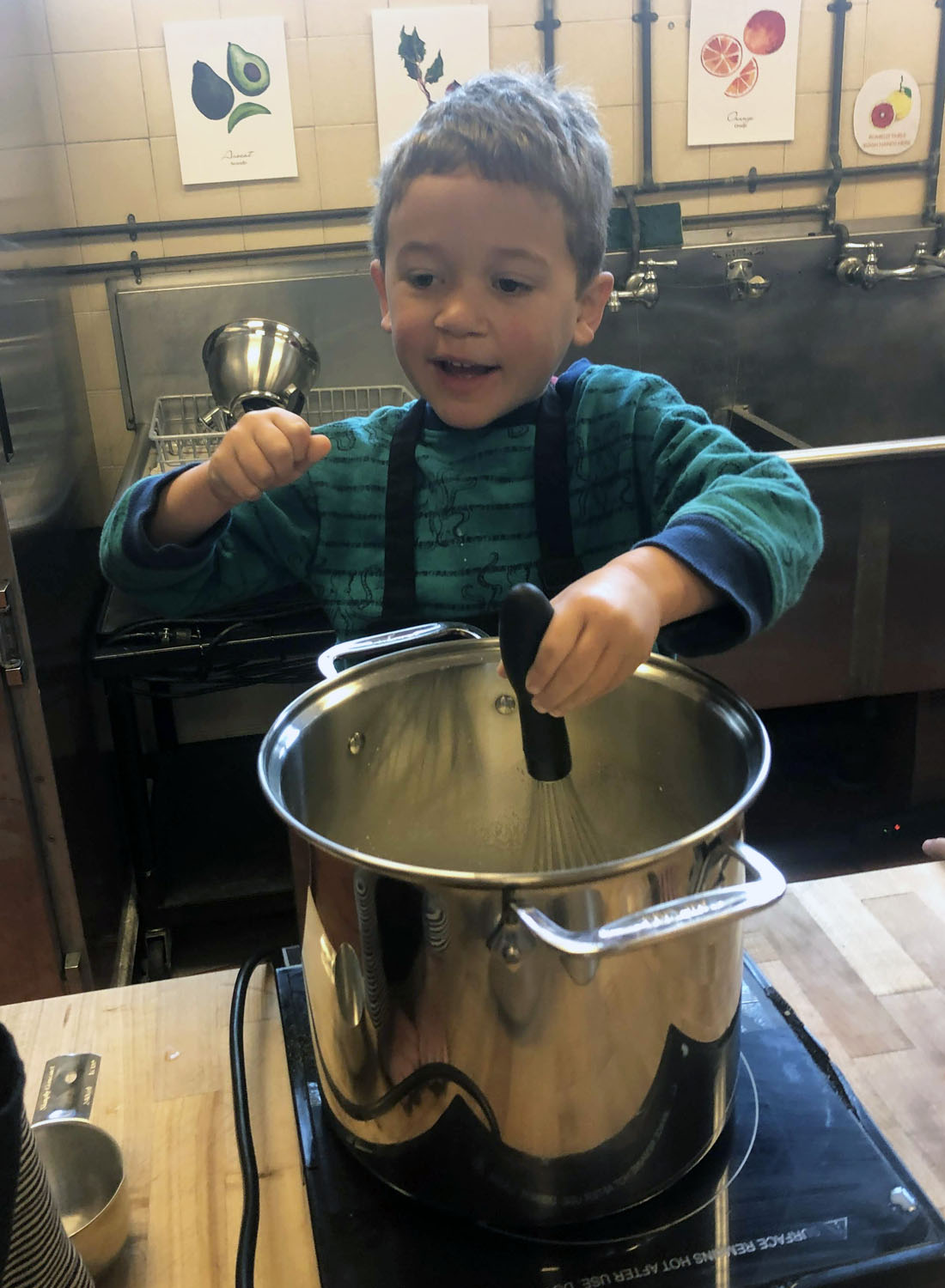
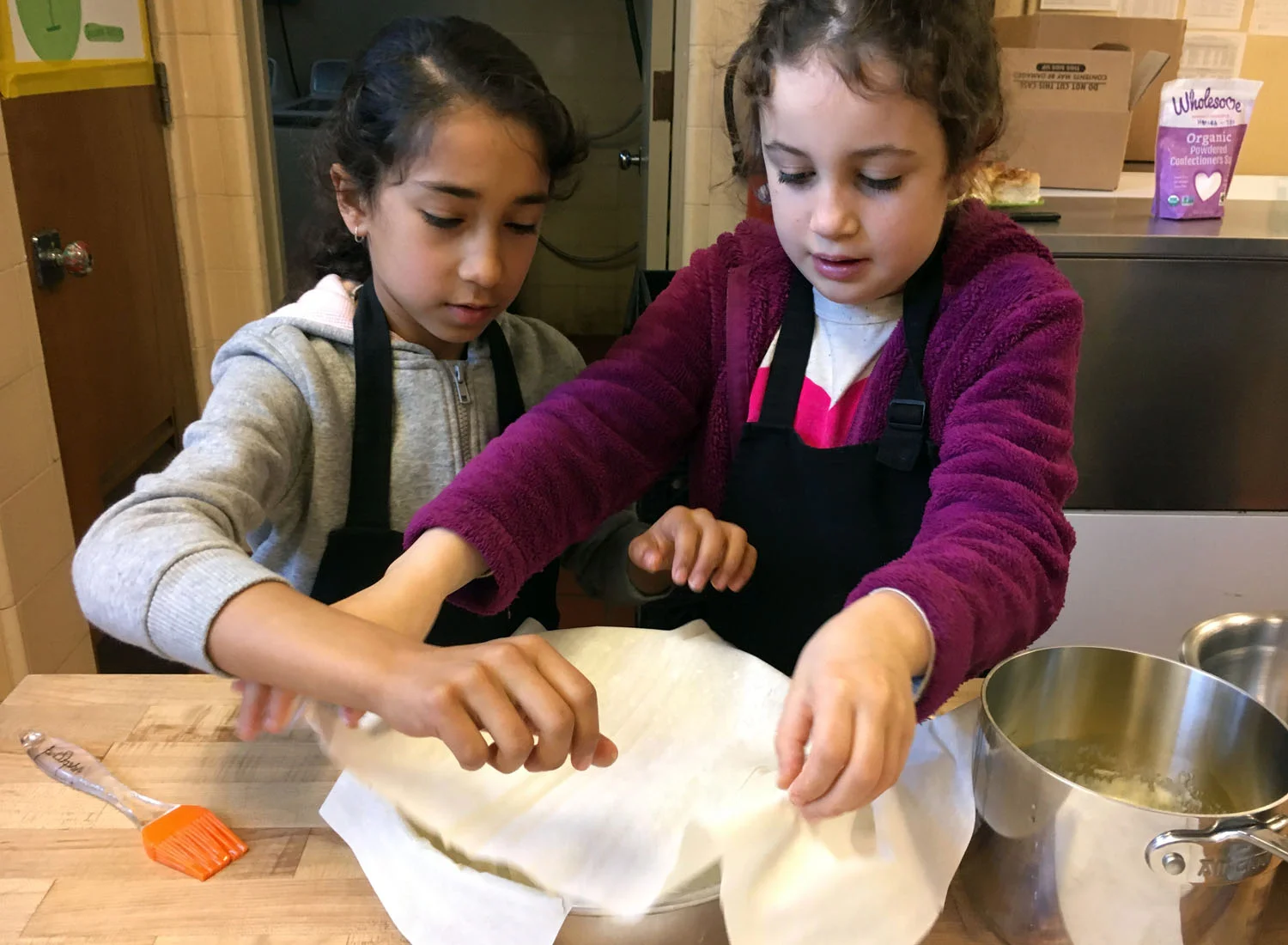
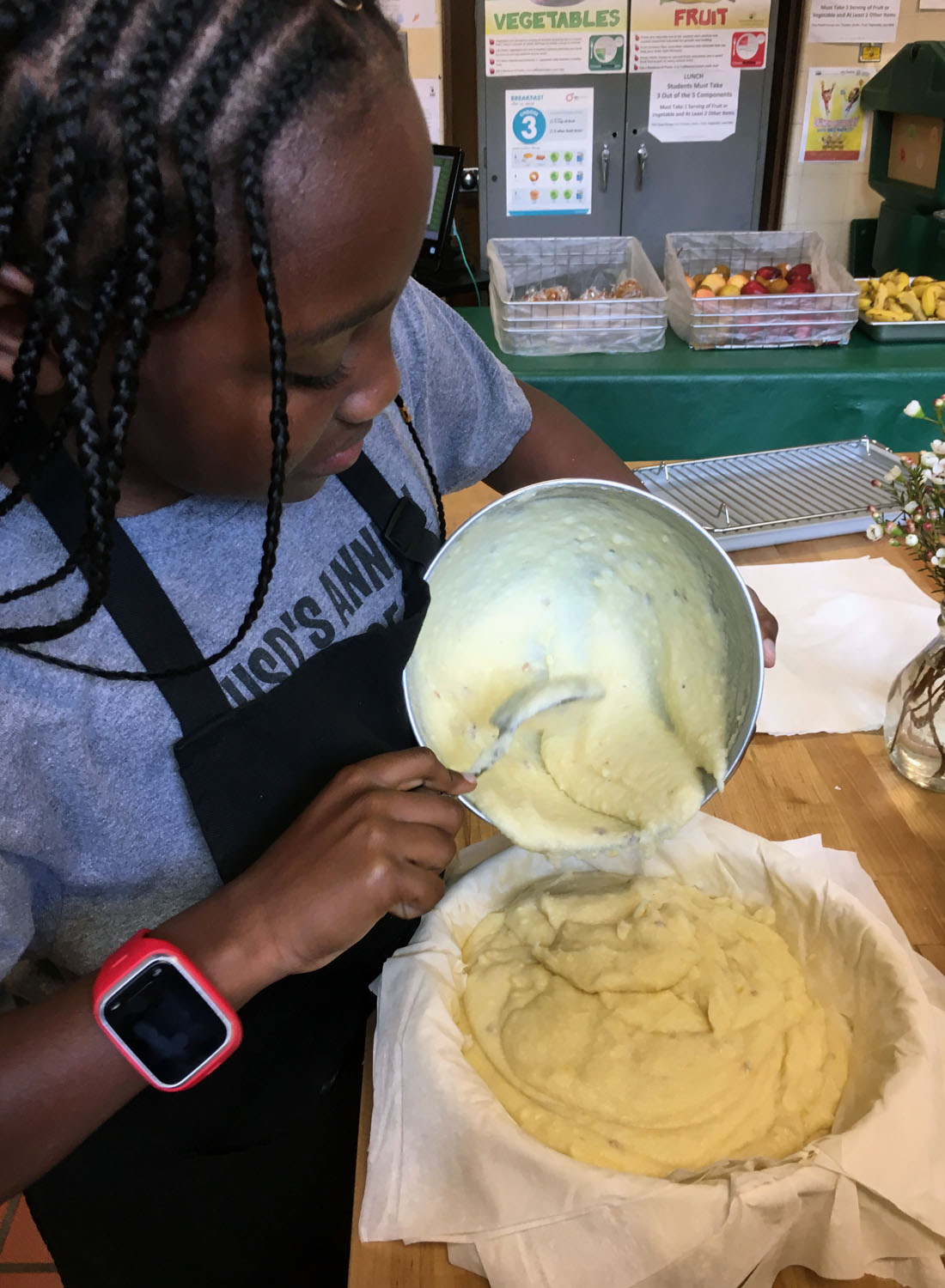
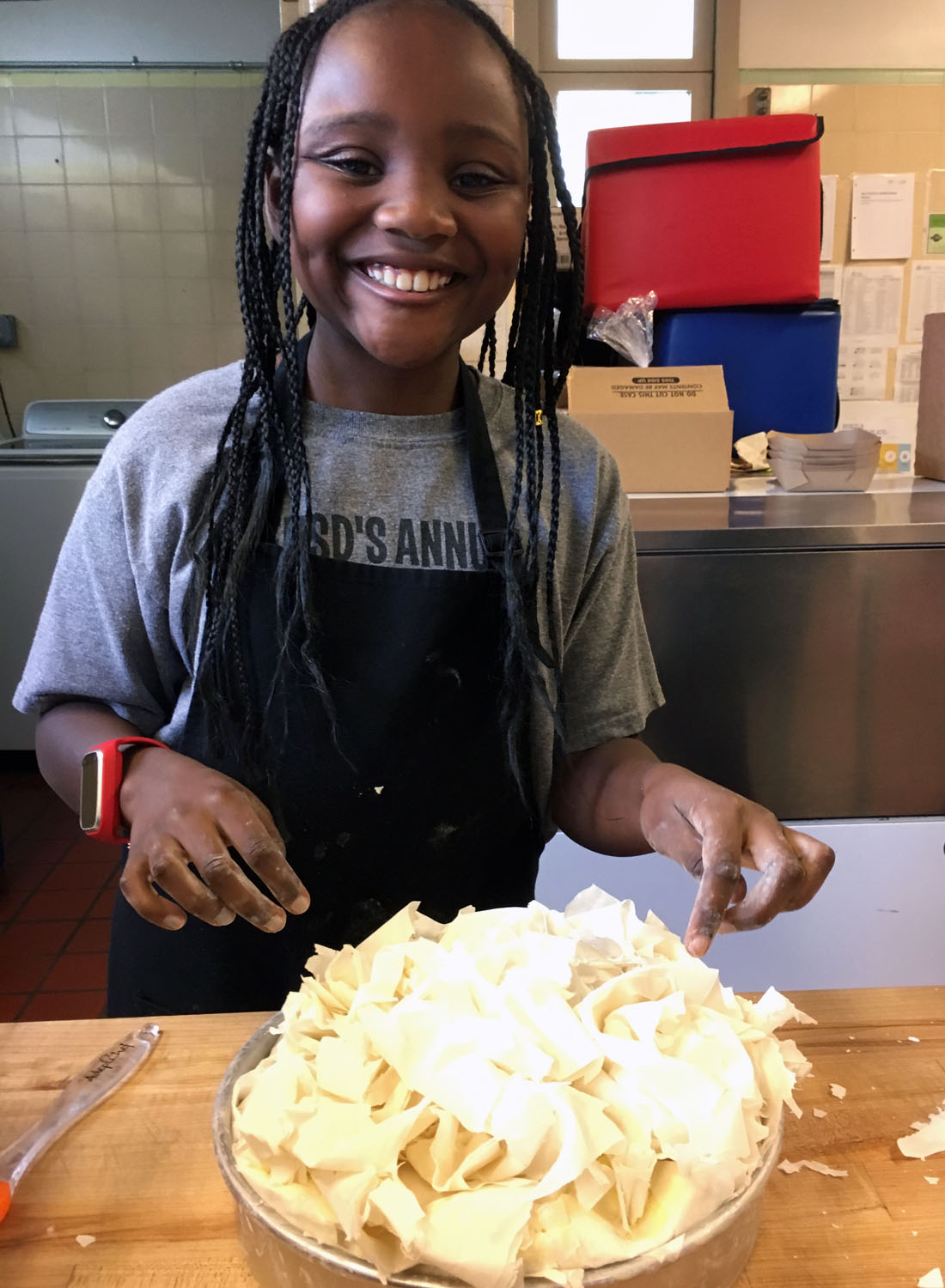
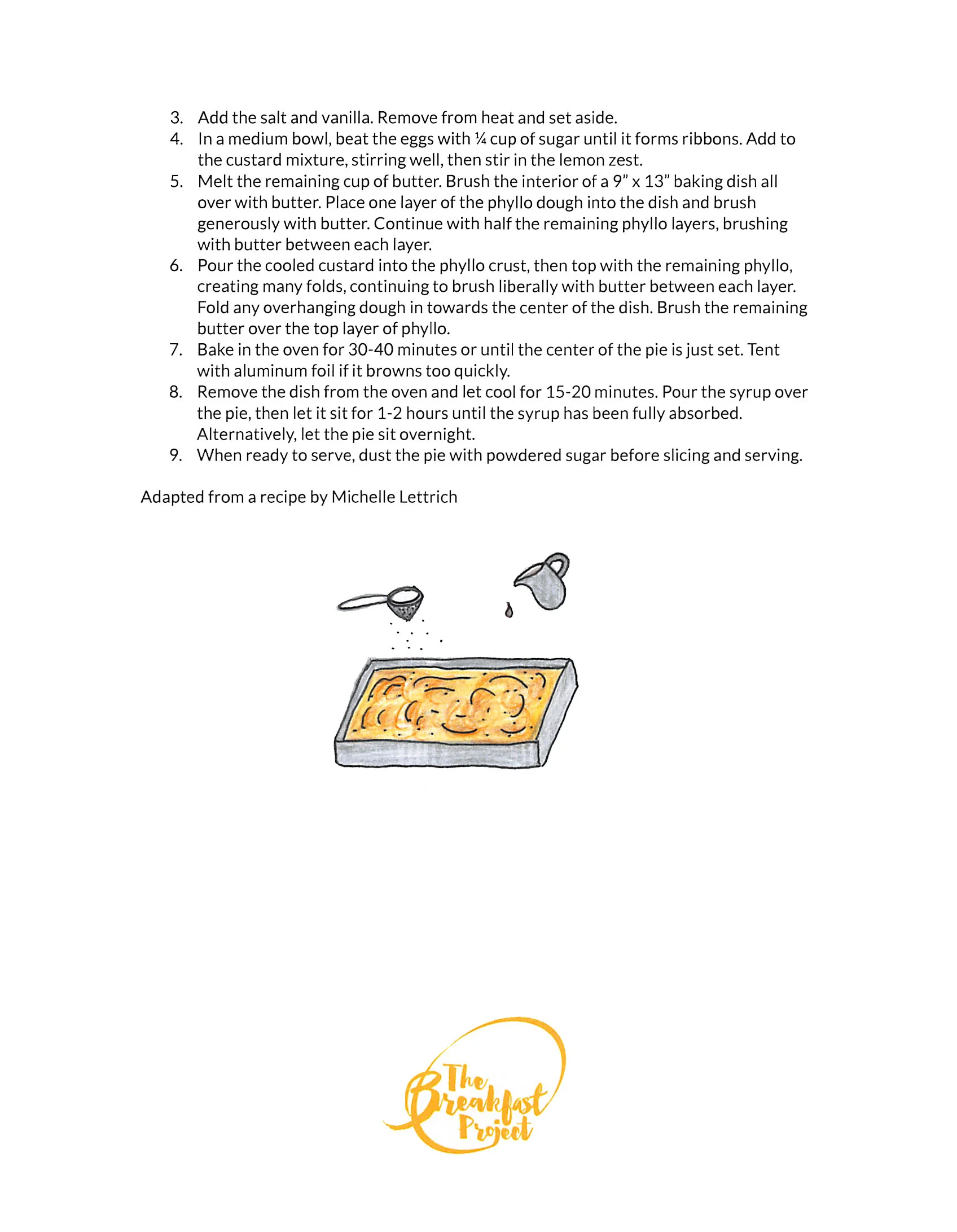
A parent from our community generously donated two June smart ovens to us, so we thought we’d give baking a go this week. Just in time for Pi Day, students made galaktoboureko, or milk pie, from Greece, which is basically a custard made from semolina (not dissimilar in taste and texture to Cream of Wheat cereal) wrapped in many layers of buttered phyllo dough. Everyone had a lot of fun working with the tissue-thin sheets of phyllo. Because our class time doesn’t allow for the entire start-to-finish baking process, which involves letting the pie cool and drizzling it with sugar syrup, each class baked pies for the next day’s class. This means we had many slices to serve at the parent faculty club meeting on Tuesday night as well as to give away to the incredible teaching and support staff at Harvey Milk every morning this week.
The phyllo is very forgiving - if it tears, it just adds another flaky layer to the final result. I must say the pies the kids made were simple to prepare yet looked magnificent and tasted even better. Hooray for pi and pie!








Rock and Rollers: Week 1B
We were delighted to welcome back to the kitchen this week some of the older chefs we haven’t seen since our Soup Squad classes in December. Our first rolled food comes from Mexico, home of the burrito. Students made a fresh salsa, grated cheese, and prepared a pot of Mexican rice with fresh garlic, tomato paste, cumin, and chili powder. While the rice cooked we played a rousing game from Mexico called Lotería! Then we assembled our burritos and listened to the Mexican band Los Teen Tops, which reminded us all a lot of the music of Elvis Presley.
When class was over, students were excited to make extra burritos to share with their teachers and friends in the rest of the after-school program!


2nd Grade Edible Social Studies: Week 7
We started class this week by discussing how humans have used the art of food preservation to slow the decomposition process of animals and plants for thousands of years. Preserving the summer bounty not only ensured that families could survive through the harsh winter months, but processes like fermentation also added new flavors (e.g. milk preserved as cheese) and nutritional value (e.g. cabbage preserved as kimchi or sauerkraut) that weren’t present in the original ingredients.
In the Bay Area, we’re lucky to have a winter bounty in addition to a summer one, so we made winter refrigerator pickles this week from local produce, preserving watermelon radishes, carrots, and romanesco. We’ll eat them in class next week. Many students were excited to realize that pickles can be made with practically any ingredient you want, not just with cucumbers.
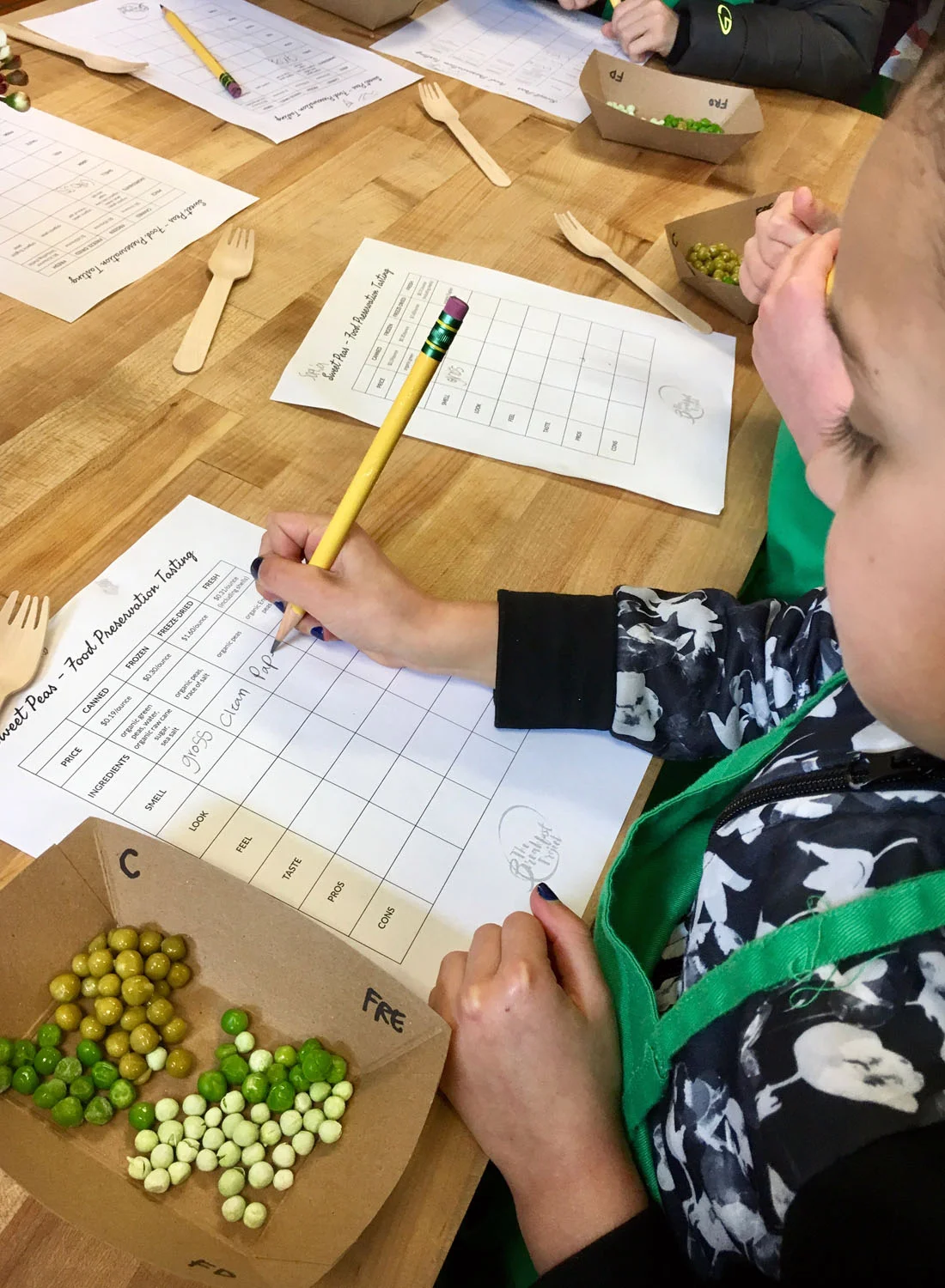
While our pickling brines were cooling, we did a tasting of sweet peas, comparing freshly shelled and blanched ones with peas that had been canned, frozen, and freeze dried. We looked at the cost of each process and talked about pros and cons of each type. Canning, for example, allows peas to have a long shelf life and is a good candidate for an earthquake emergency kit you plan to store for many months if not years. Freezing, on the other hand, maintains the vibrant color of the peas, but will expire sooner than canned peas.
Our young scientists used all their senses to compare and contrast the different peas and filled out a matrix with their notes. In our closing circle, each chef announced their favorite type of pea and we tallied up the votes to see which pea was the winner. A few students decided in the end that it was most delicious to mix all the different kinds of peas together! My favorite written observation from the two classes was that fresh peas felt “good for the soul.”




Breakfast Around the World Week 8: Mexico
We’ve made a number of delicious Mexican breakfasts in the school kitchen over the past few semesters, but never simple yet satisfying huevos rancheros. The dish was so popular we had several chefs waiting at the door at 8 a.m. asking if they could come to class even though they had cooked the morning before!
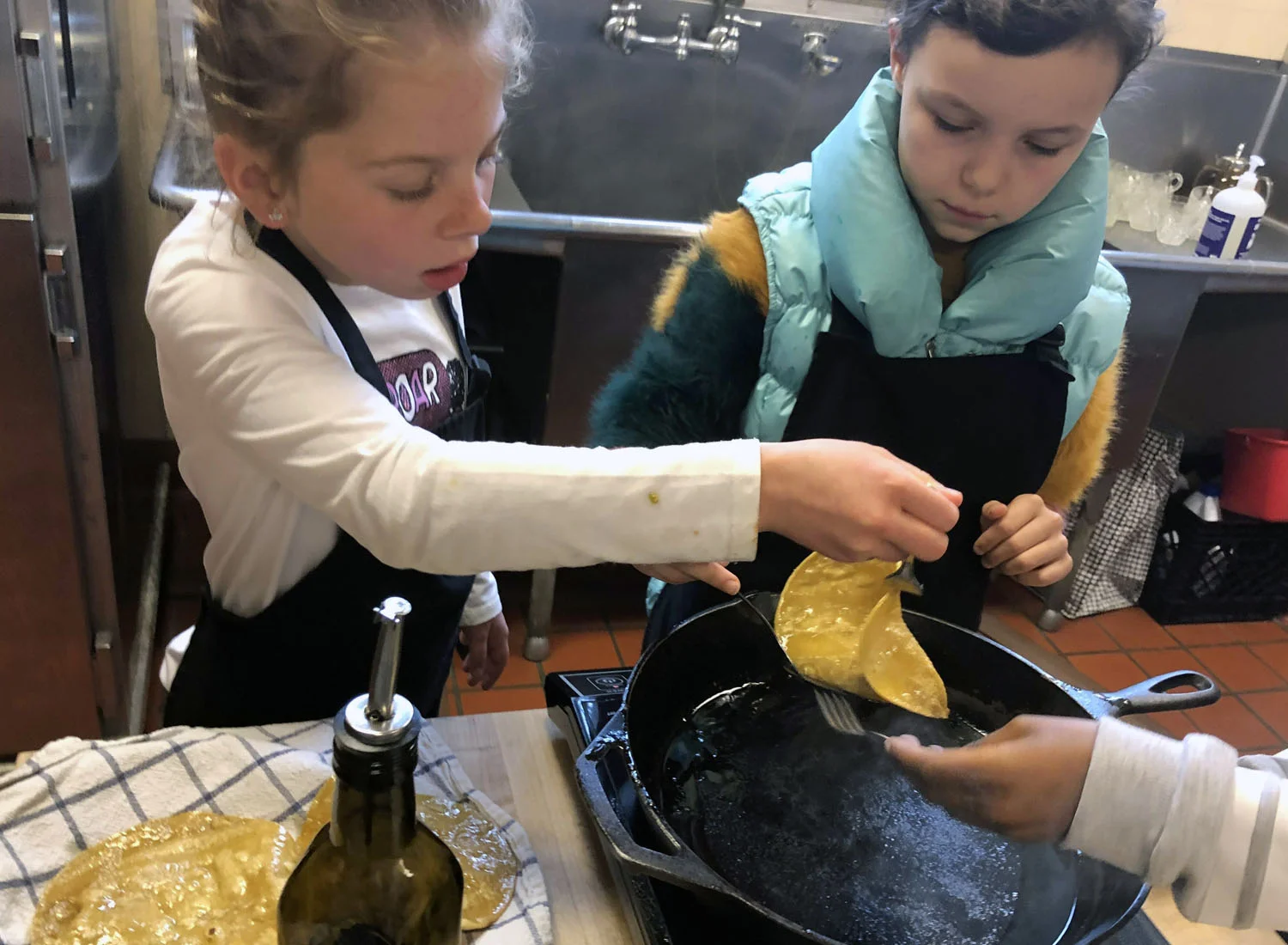
One group fried the tortillas while another group made pico de gallo, a fresh salsa that is also known as salsa Mexicana for its tribute to the colors of the Mexican flag. By now students are pros at frying eggs, so the meal came together quickly: they spread each tortilla with refried black beans, topped it with an egg and the salsa, and garnished with a squeeze of fresh lime juice, sprigs of cilantro, slices of avocado, and some pickled onions we had leftover from last week’s class. All three mornings the atmosphere was calm, collaborative, and fun. I’m really proud of how far our young cooks have come since the beginning of the year. ¡Salud!




2nd Grade Edible Social Studies: Week 6
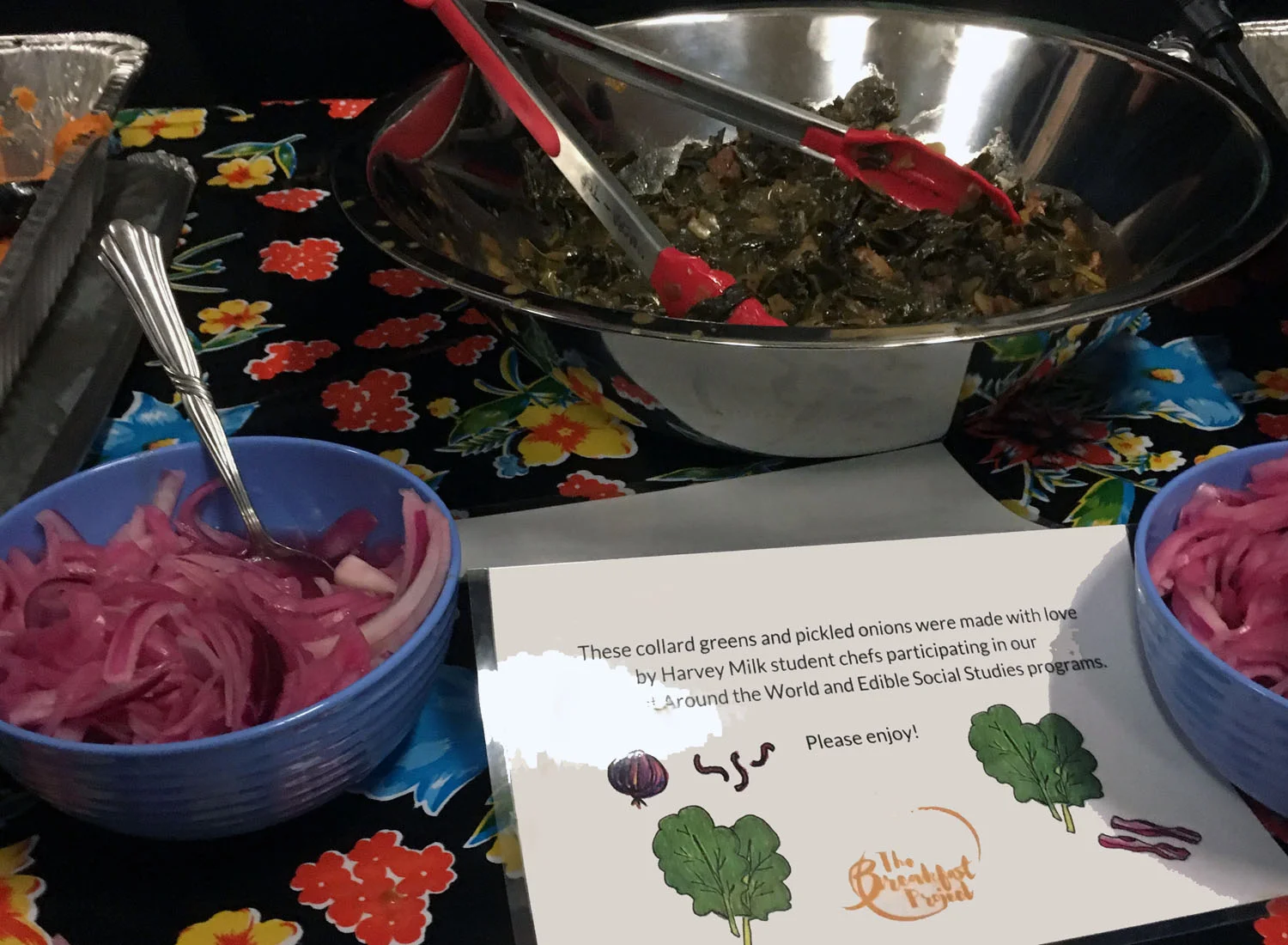
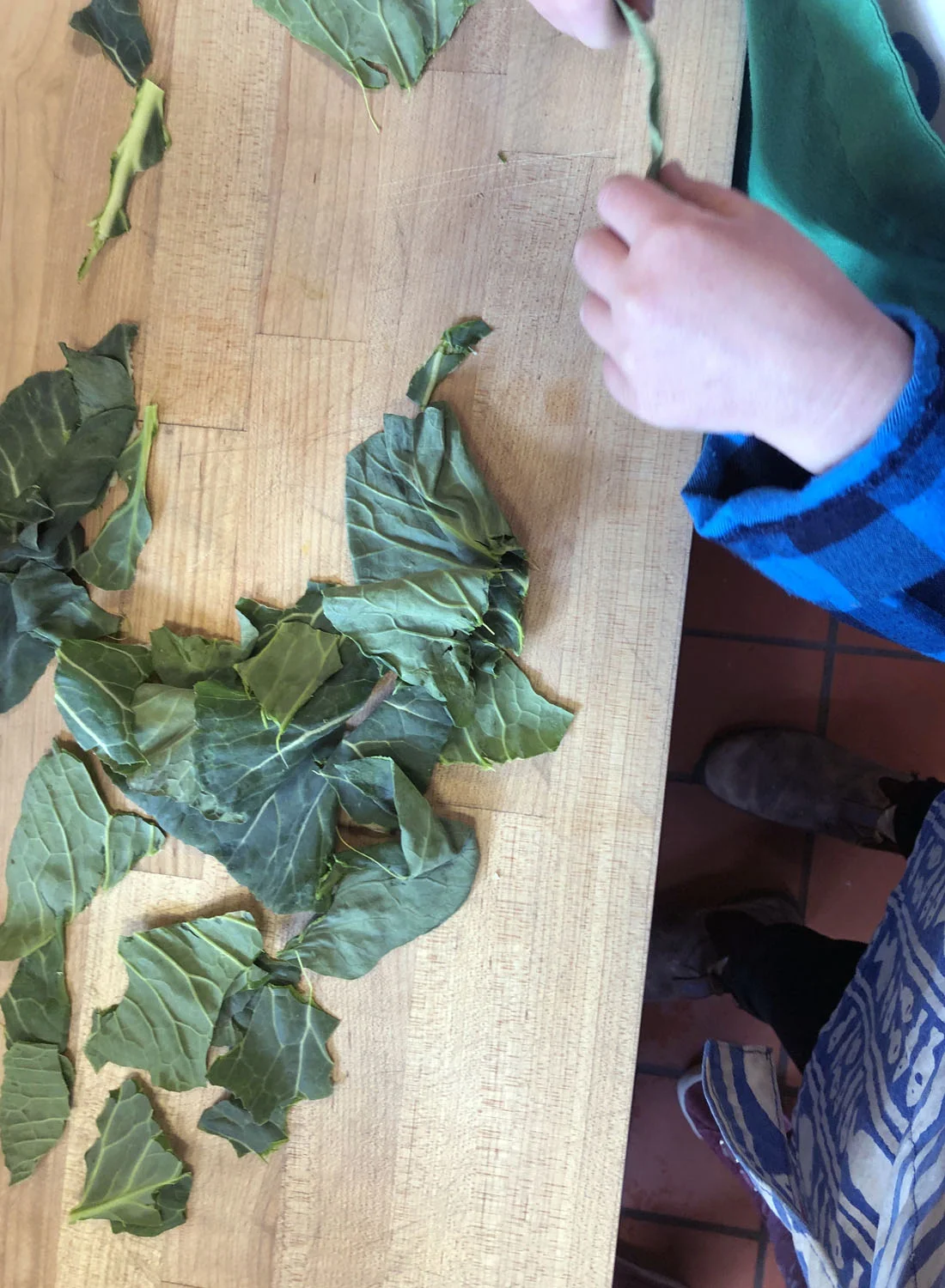
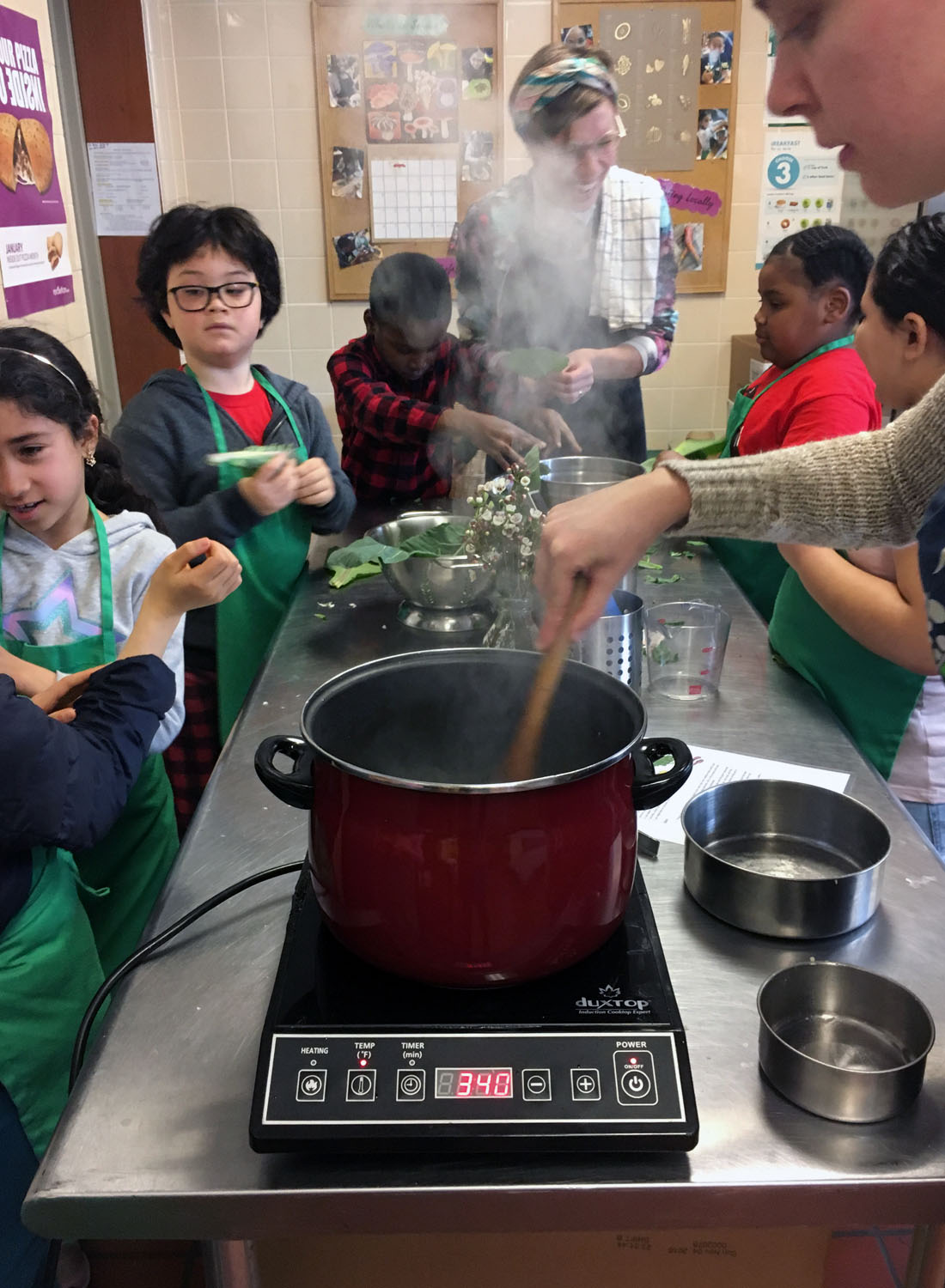
This week we worked with another popular member of the Brassica genus, collard greens, and a rare ingredient in The Breakfast Project kitchen, bacon! We discussed the culinary tradition of eating stewed greens with bread to soak up their cooking juices, which is found in many countries across the African continent. Starting in the 1600s, enslaved African people took the ingredients they had access to in Colonial America and applied traditional cooking methods from their homelands, creating new dishes that had never existed before. We watched a video of Dadisi Olutosin, a chef from Atlanta, Georgia, talk about the collard greens he grew up eating in the South and how he now prepares the dish with overt Caribbean and West Indian influences like peanuts and coconut milk.
There’s no denying the results are delicious when you wait for collards to become tender and you achieve the perfect balance of savory, tart, sweet, and heat from bacon, vinegar, sugar, and hot sauce. The collards the second graders prepared were featured last night at the Black History Dinner and Honor Roll Celebration. It was really meaningful to see students take such pride in sharing their work with their families!






Breakfast Around the World Week 7: Australia
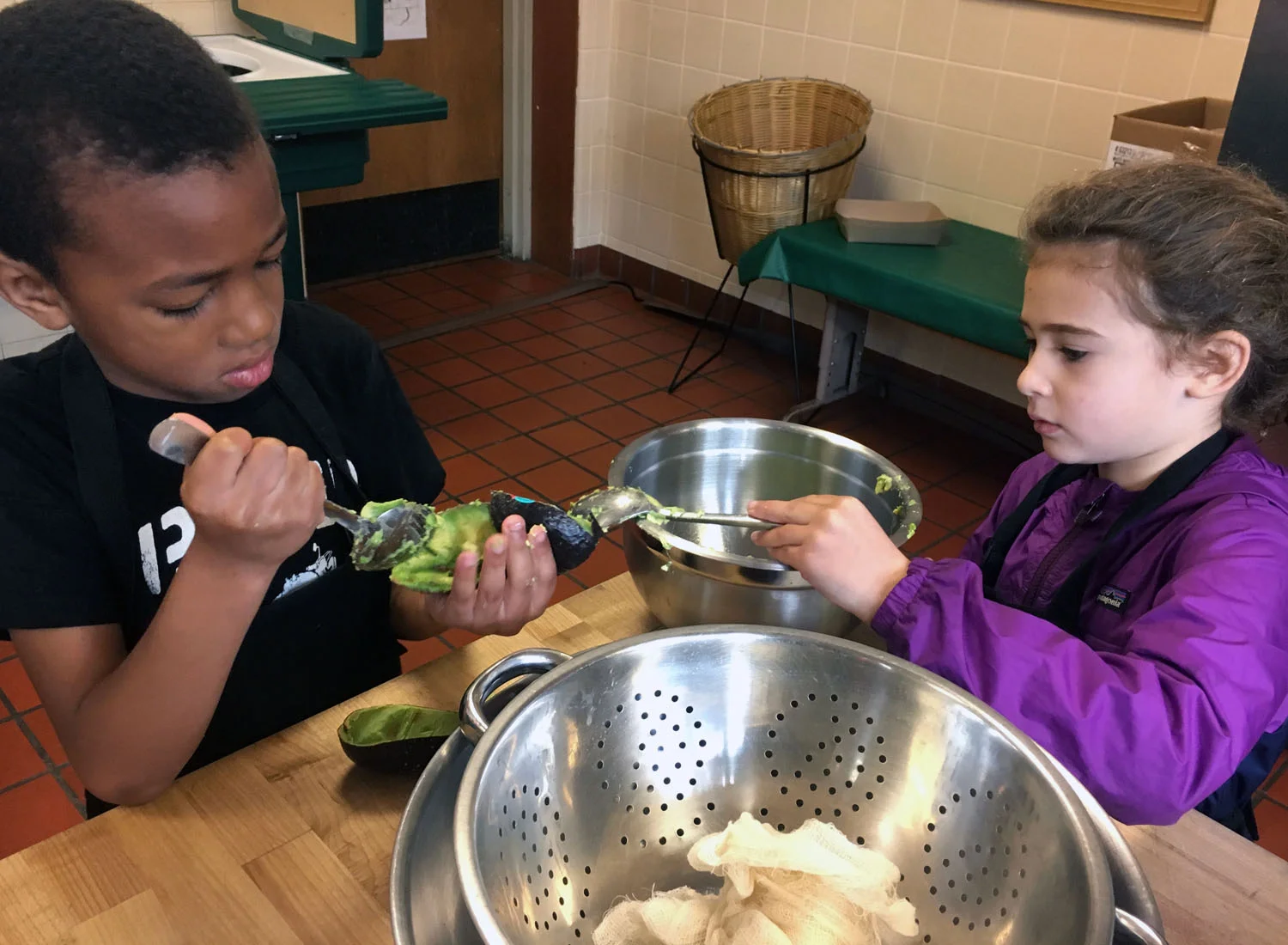
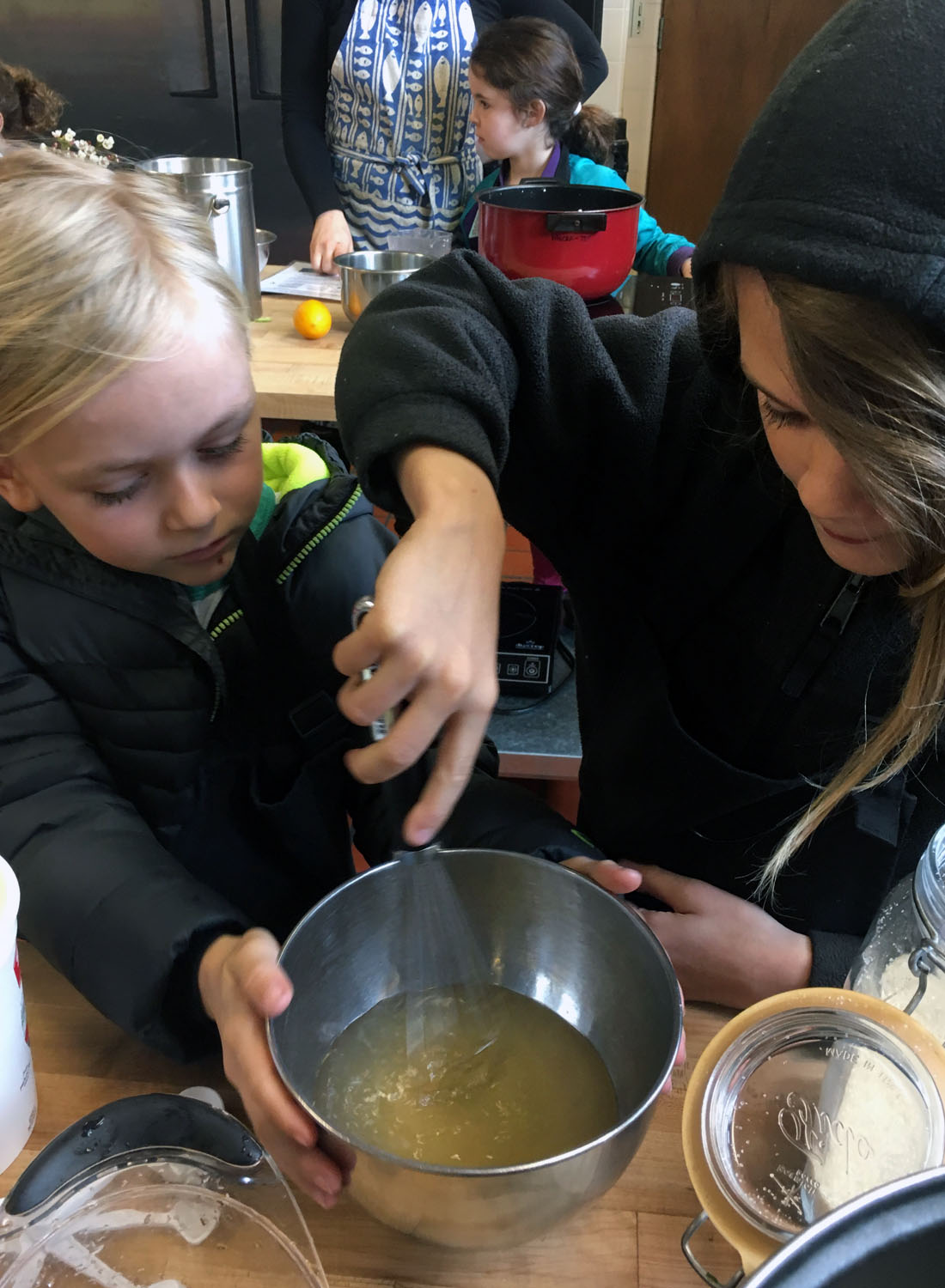
The first thing a student said on Tuesday when we introduced the country and recipe for the day was, “Aren’t avocados originally from Mexico?” Beaten at our own game, we had some explaining to do. Avocados are from the Americas, and eating avocado with grains has been around for thousands of years in both Central and South American indigenous cultures. In the early 1990s, a restaurant in Sydney popularized the “avocado toast” that we now find all over the Bay Area and on social media. This week, we pickled our own onions and made fresh ricotta as a nod to Australia’s contribution to this larger-than-life food’s story.
Over three days of classes, we had lots of variations in humidity due to the rainy weather and subsequently got totally different results with our cheesemaking. It got us thinking about offering a food science-themed class this fall where students can go deeper in their exploration of what variables affect the cooking process and the finished result. What do you think?
We had lots of extra pickled onions on Thursday and happily served them to the full house at the Black History Dinner and Honor Roll Celebration. They might make a comeback next week, too, when we make (yet another?) dish from Mexico.