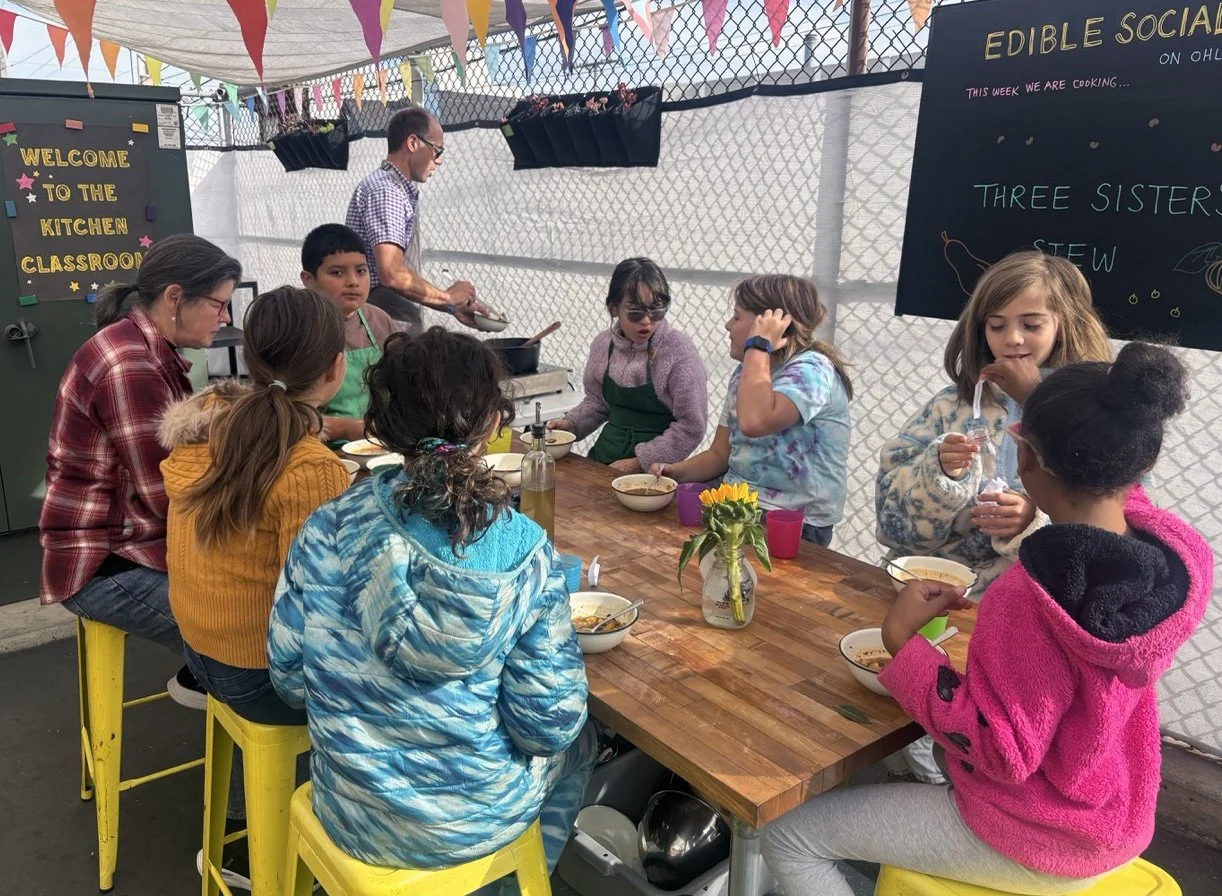
In the classroom this week we watched a TED-Ed video from Oneida educator Rebecca Webster about the ancient companion planting technique called The Three Sisters. Though the Native peoples of present-day California come largely from hunter-gatherer traditions and not from farming, The Three Sisters originated in Mesoamerica, spread to Indigenous nations like the Haudenosaunee, and is now practiced across North America.
We learned that the eldest sister, corn, provides a strong structure for beans, the middle sister, who fixes nitrogen into the soil and wraps around the corn stalk to support the corn in heavy wind. The youngest sister, squash, has wide leaves that help the soil retain moisture and contains prickles on her stems and leaves to ward off pests. When farmers plant corn, beans, and squash together as The Three Sisters, they are able to grow more nutrient-dense food than if the crops are planted separately. We also learned that a fourth sister, the sunflower, can be planted as a windbreak to protect corn, beans, and squash.
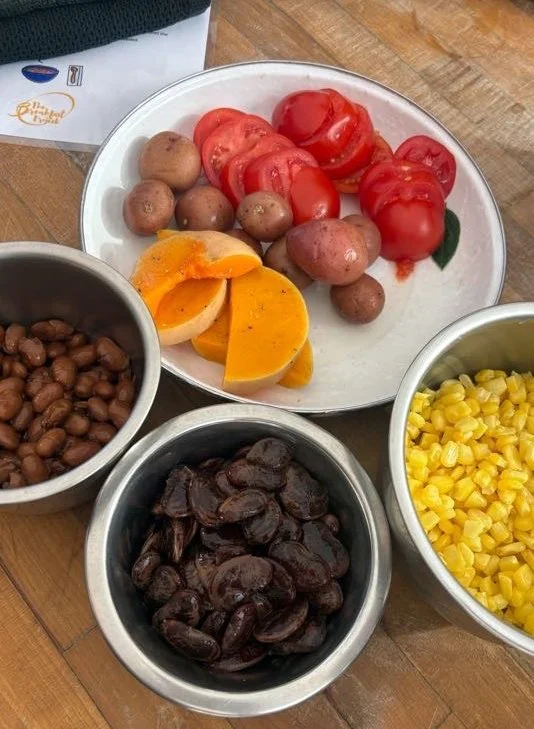
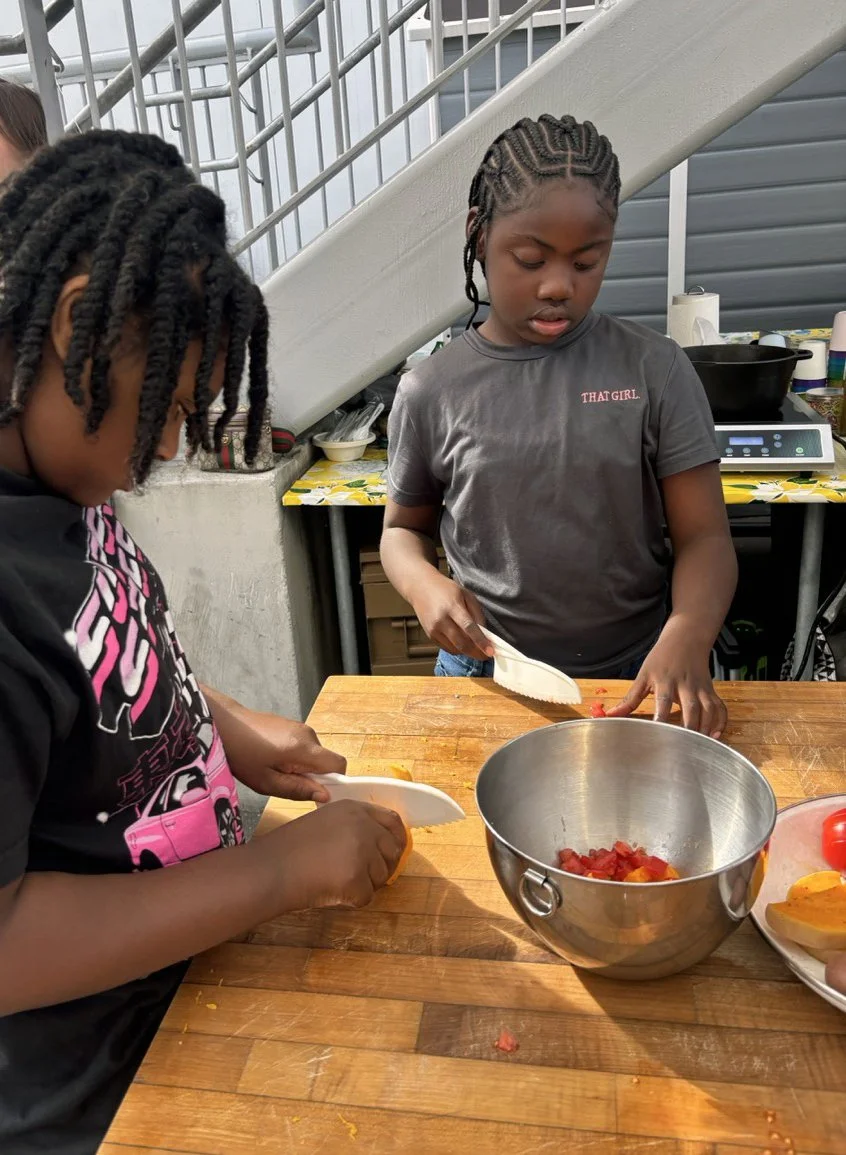
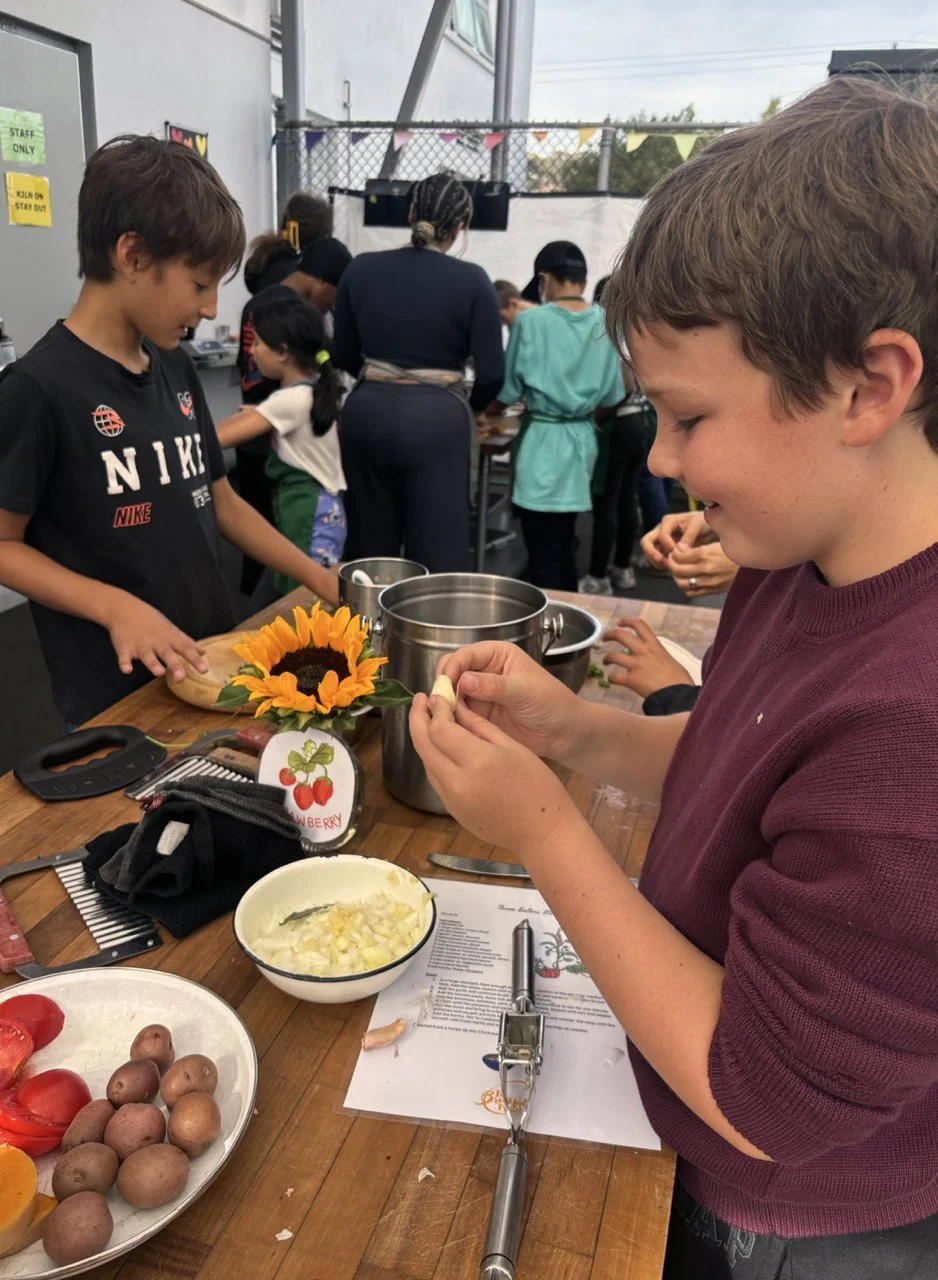
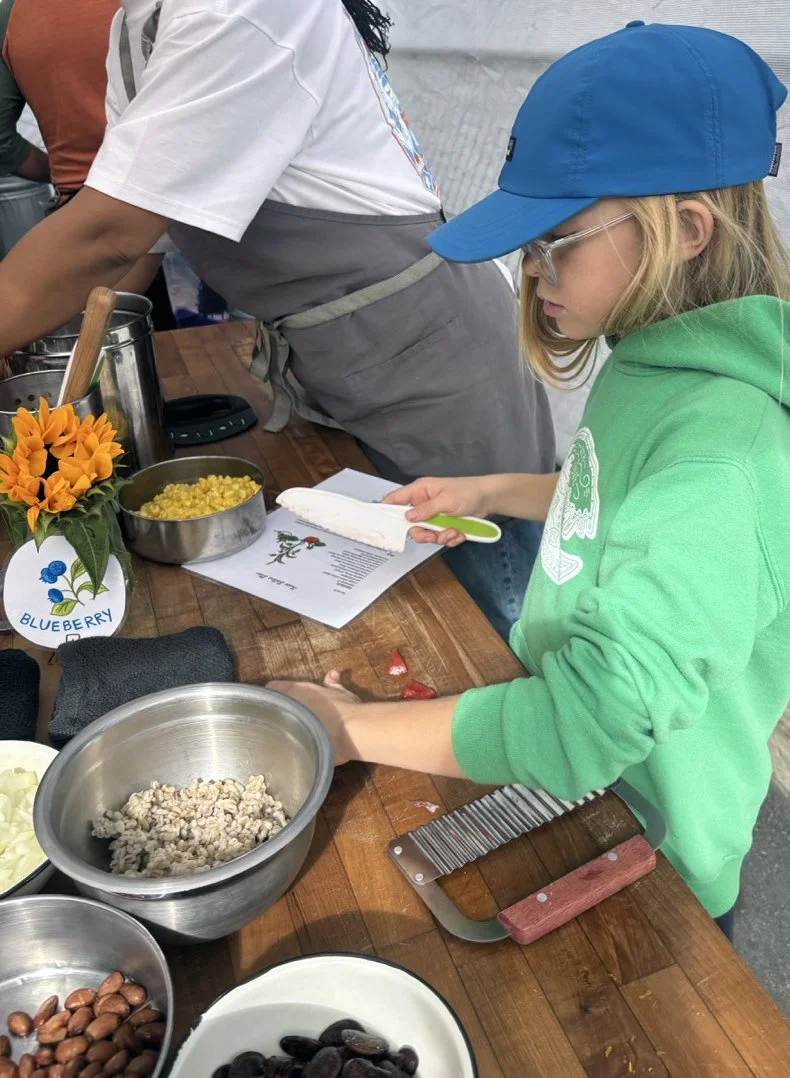
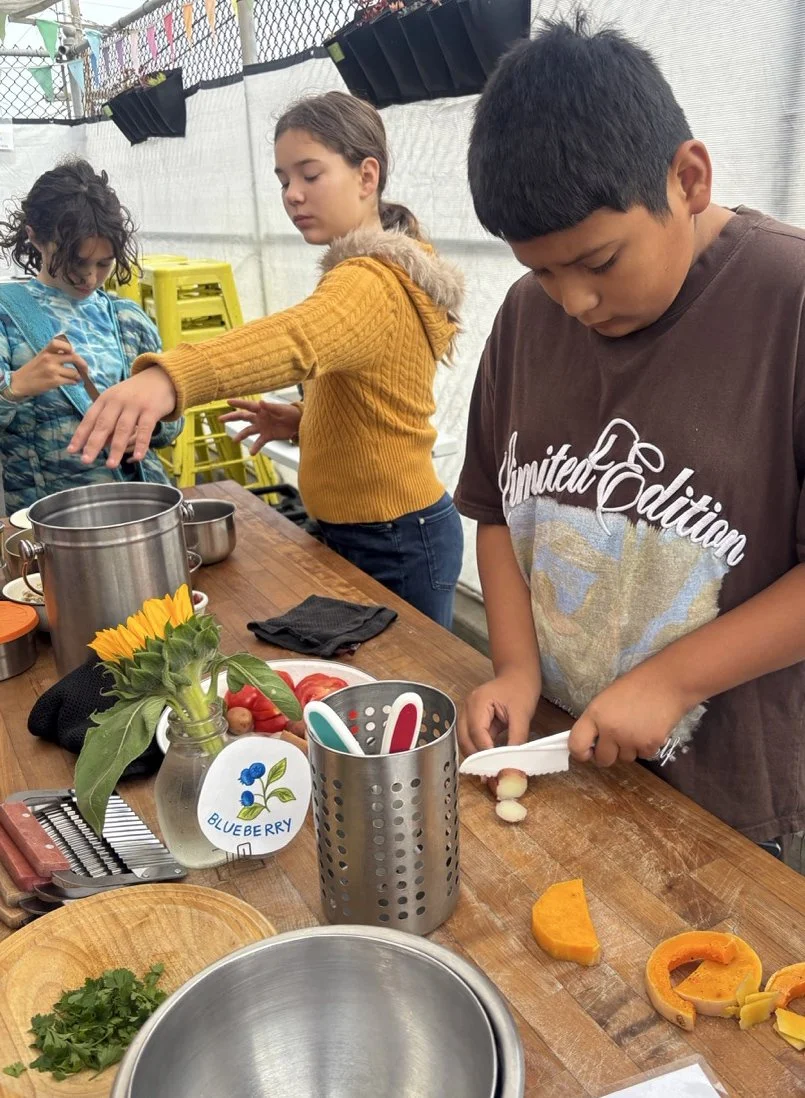
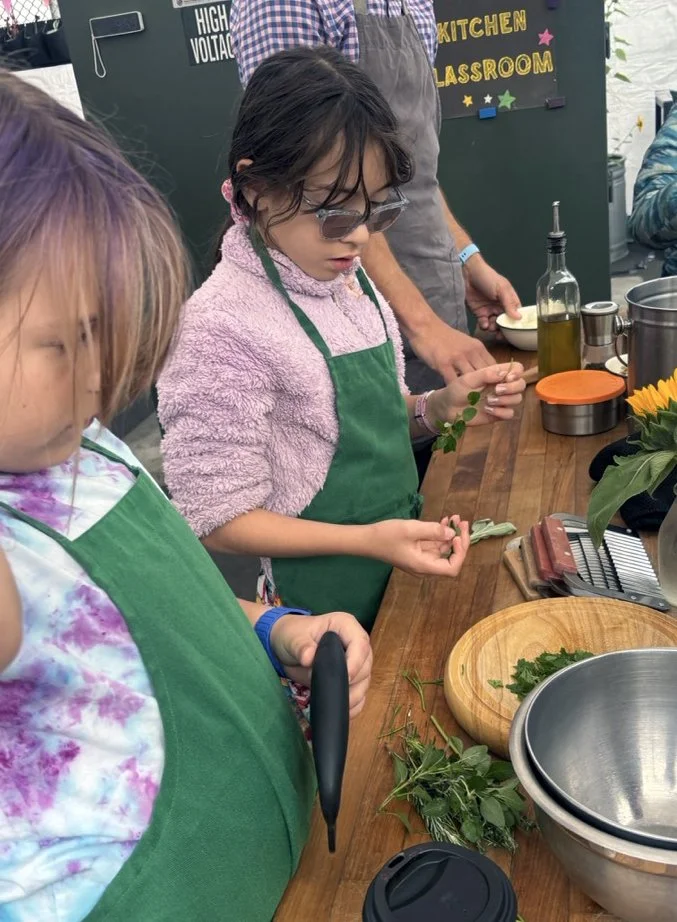
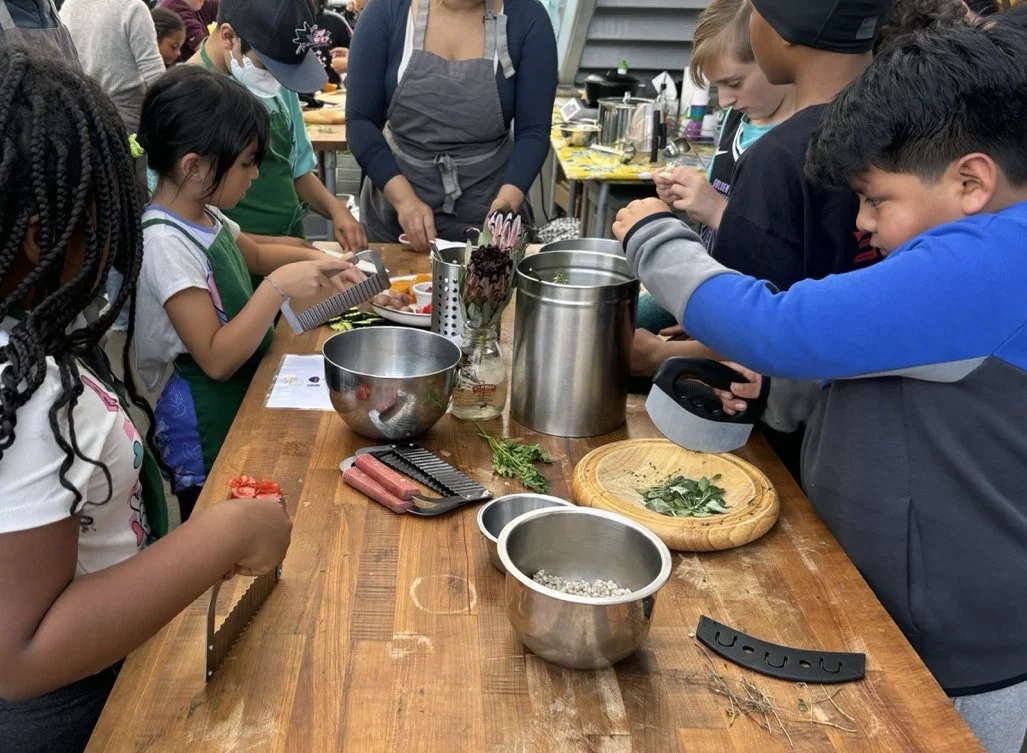
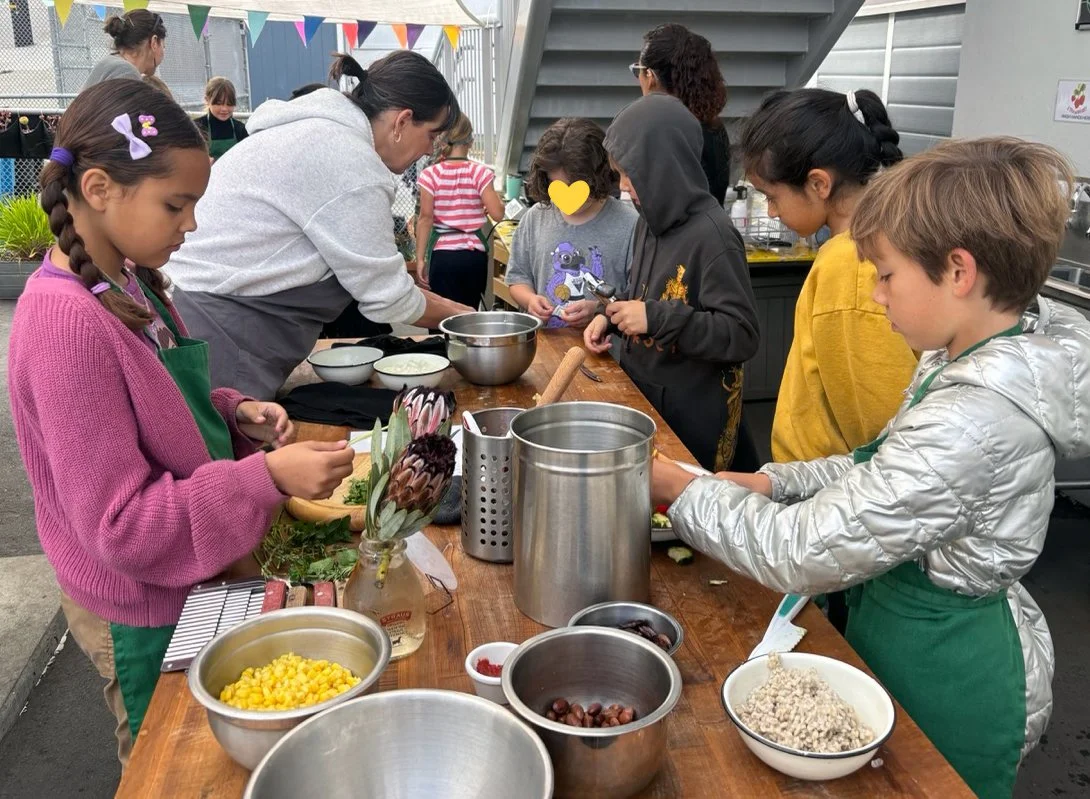
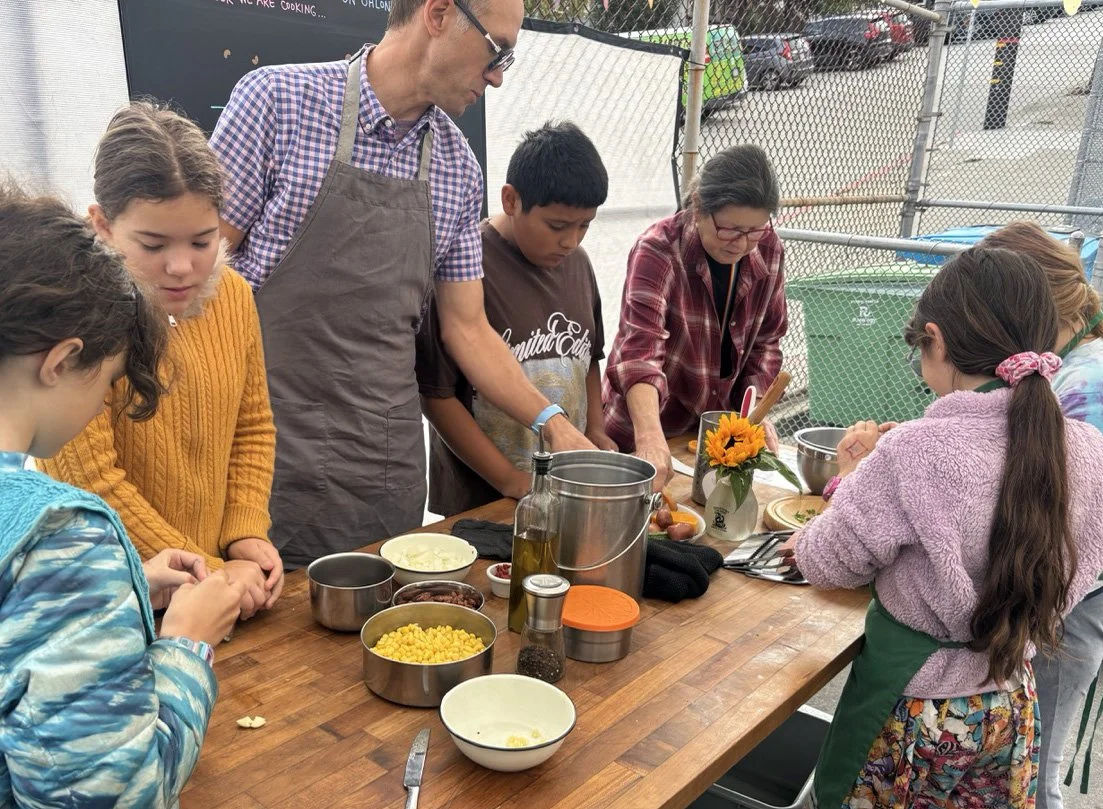
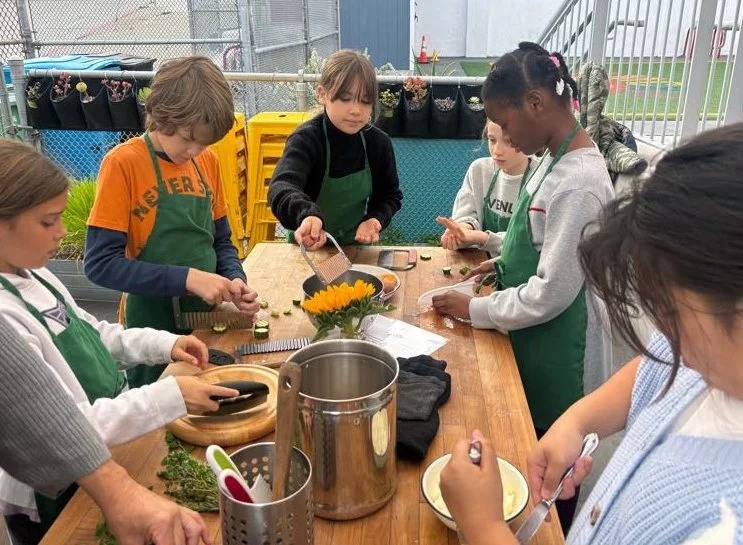
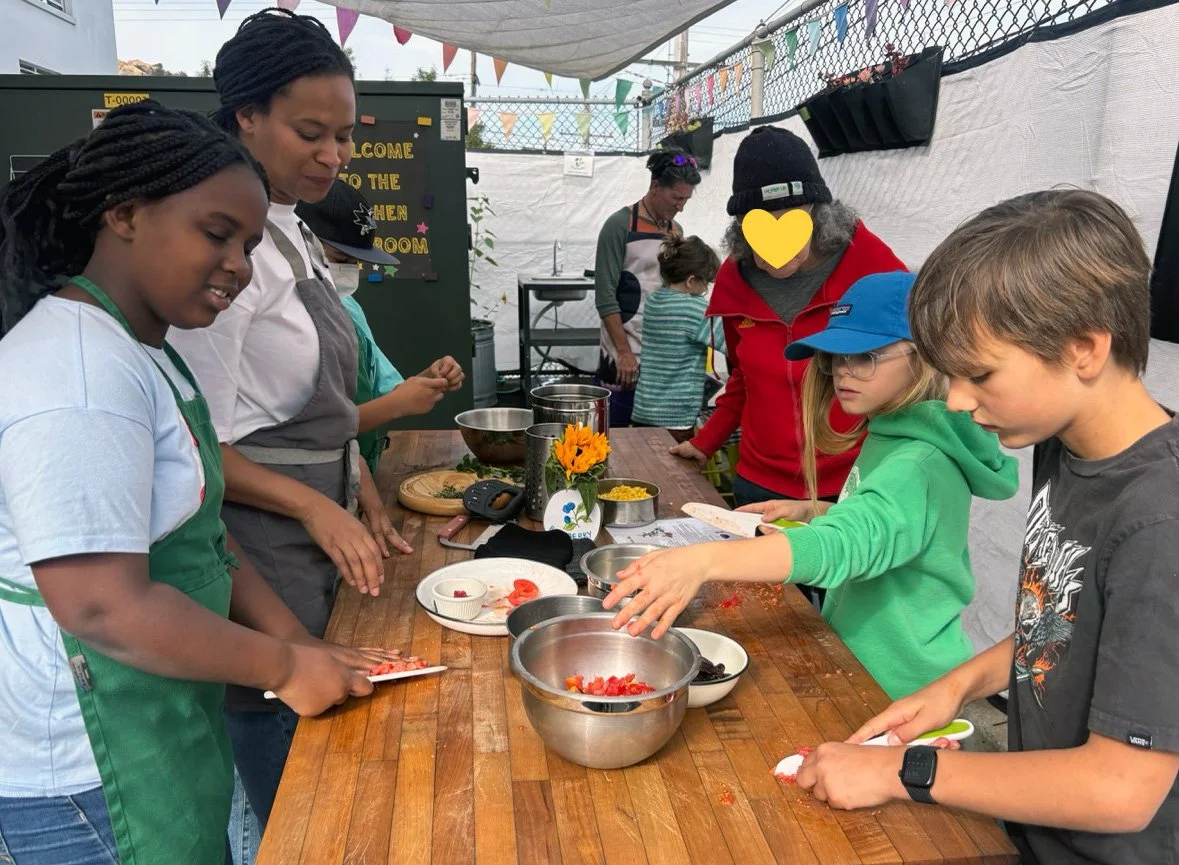
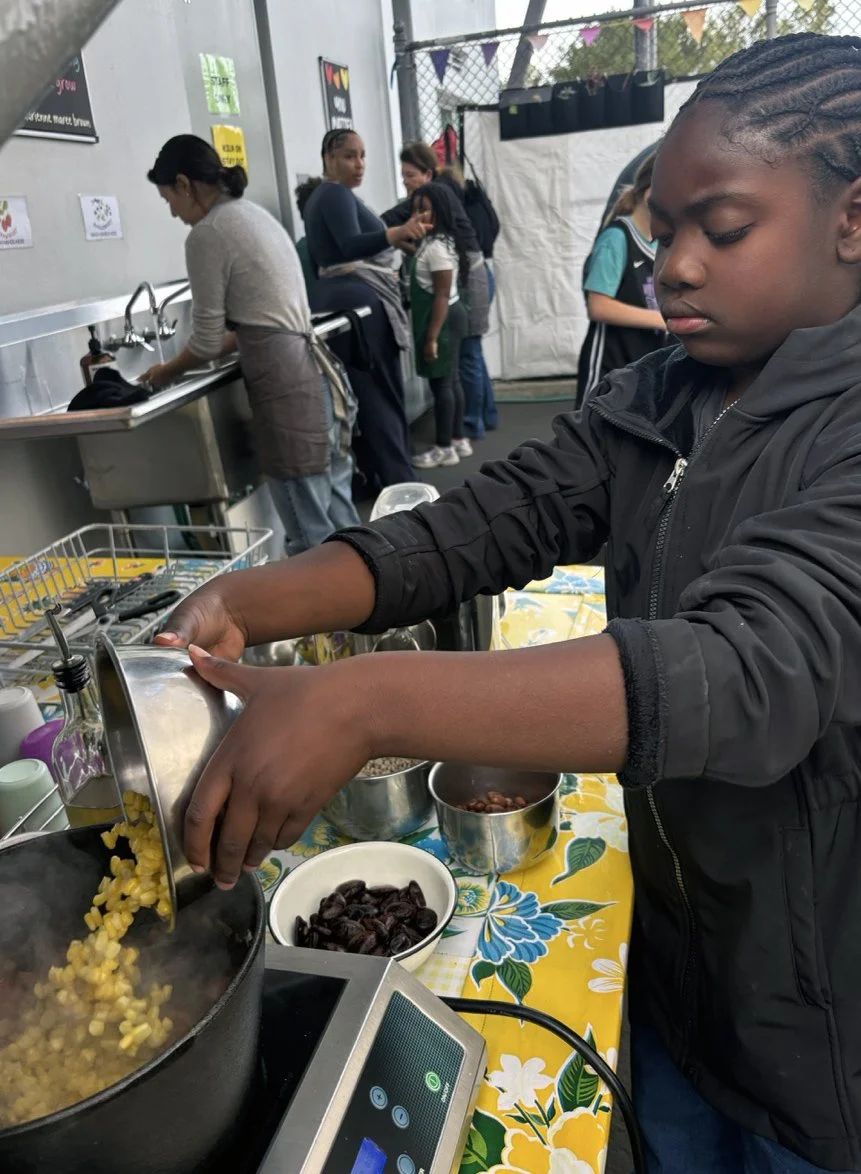
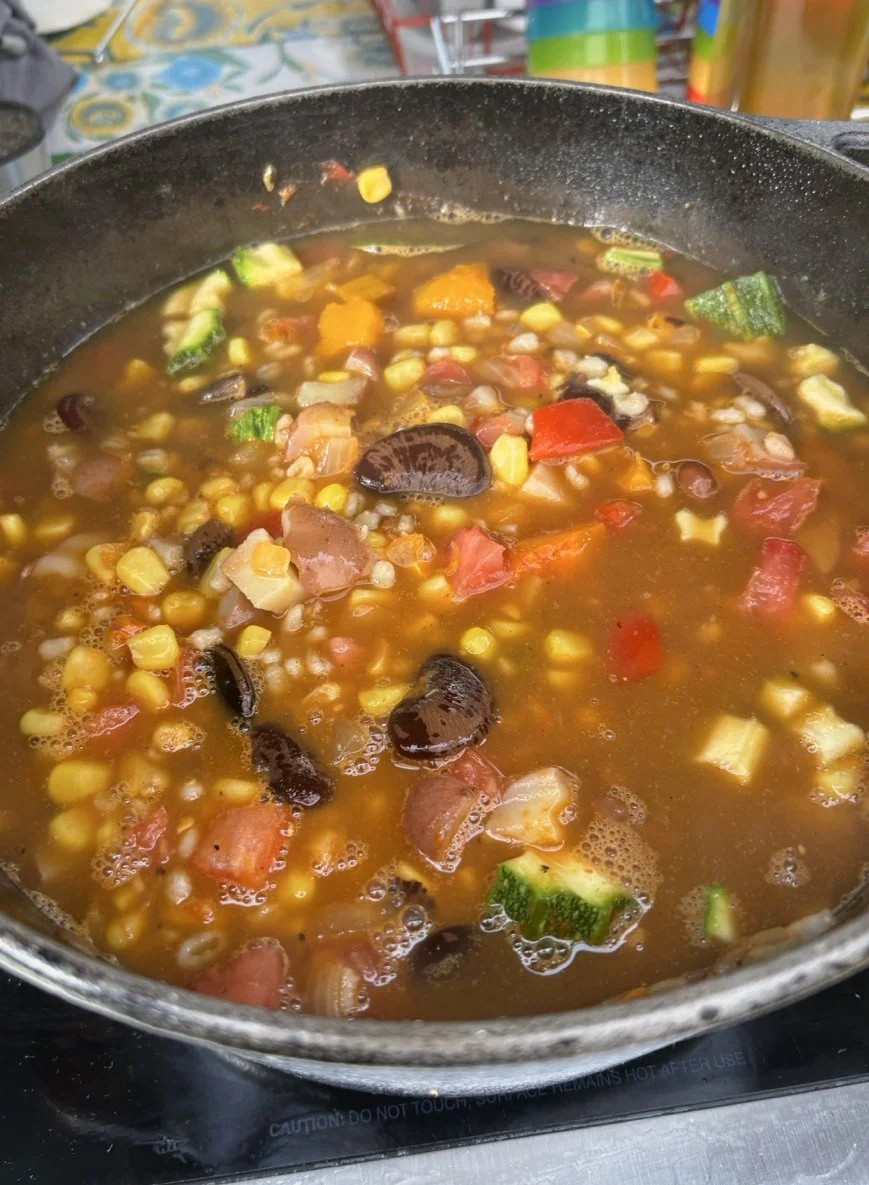
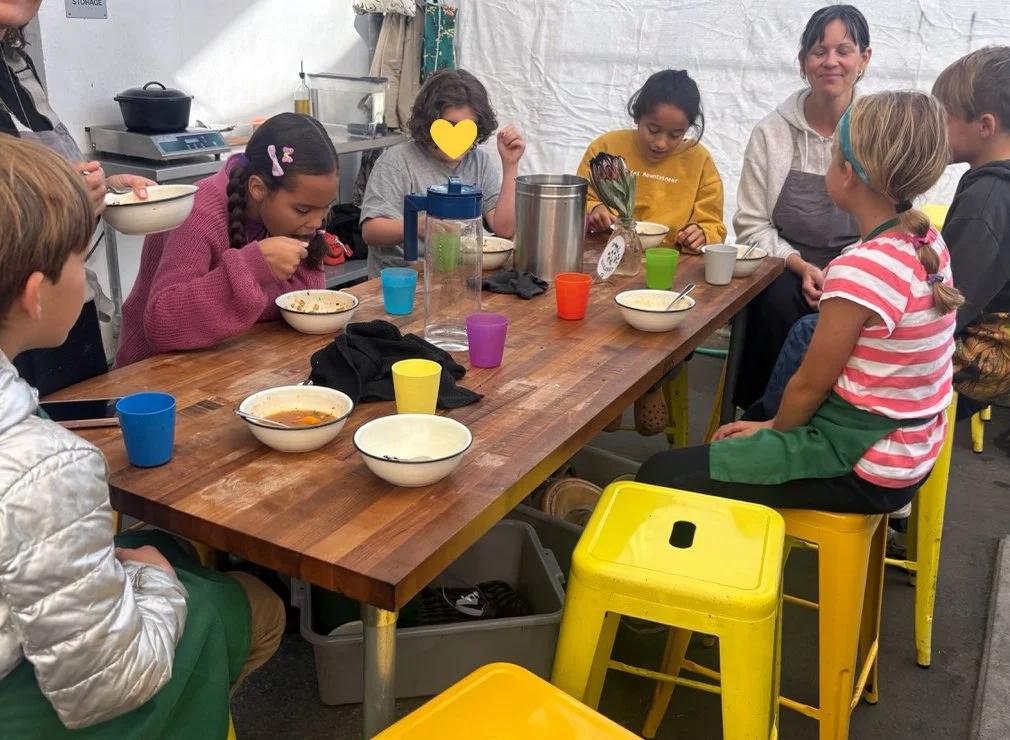
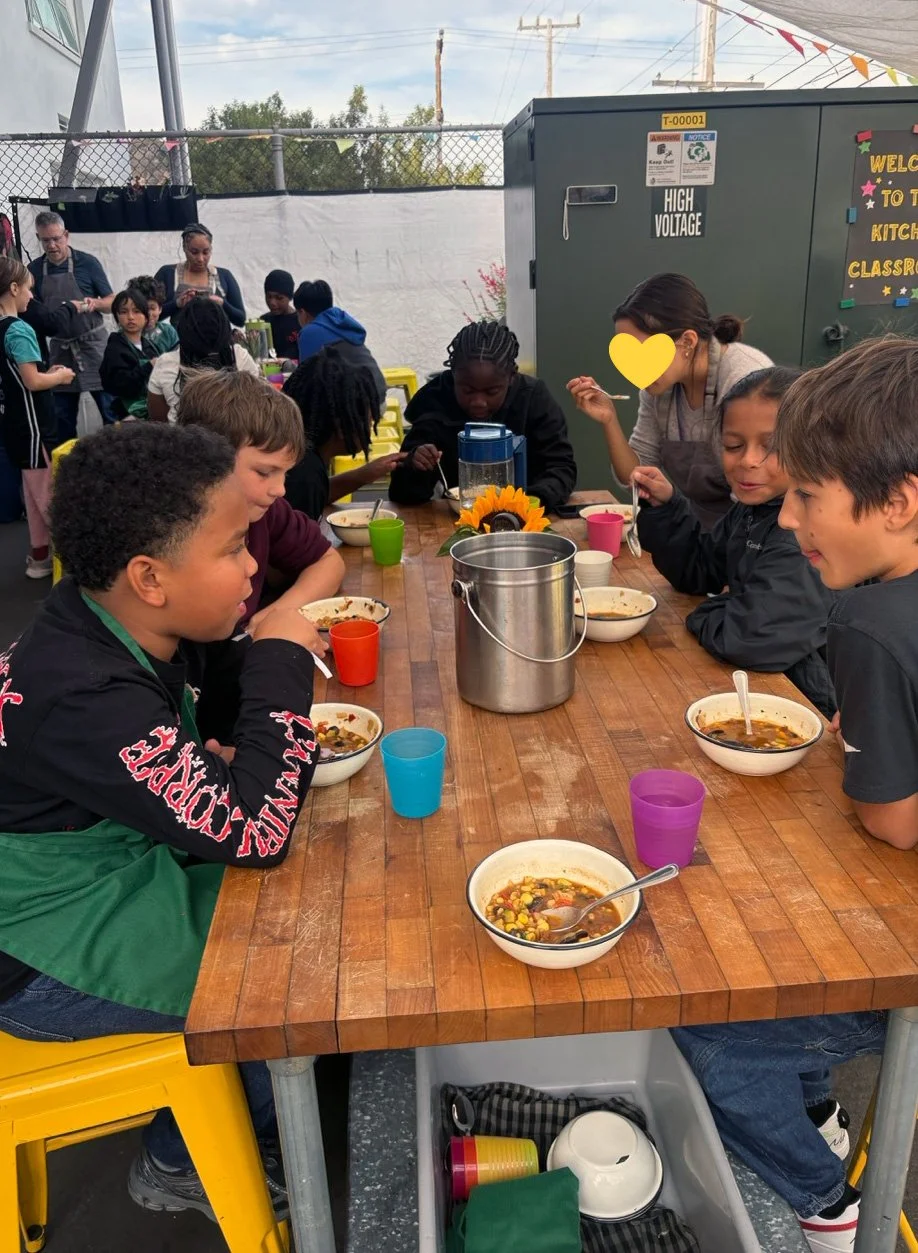
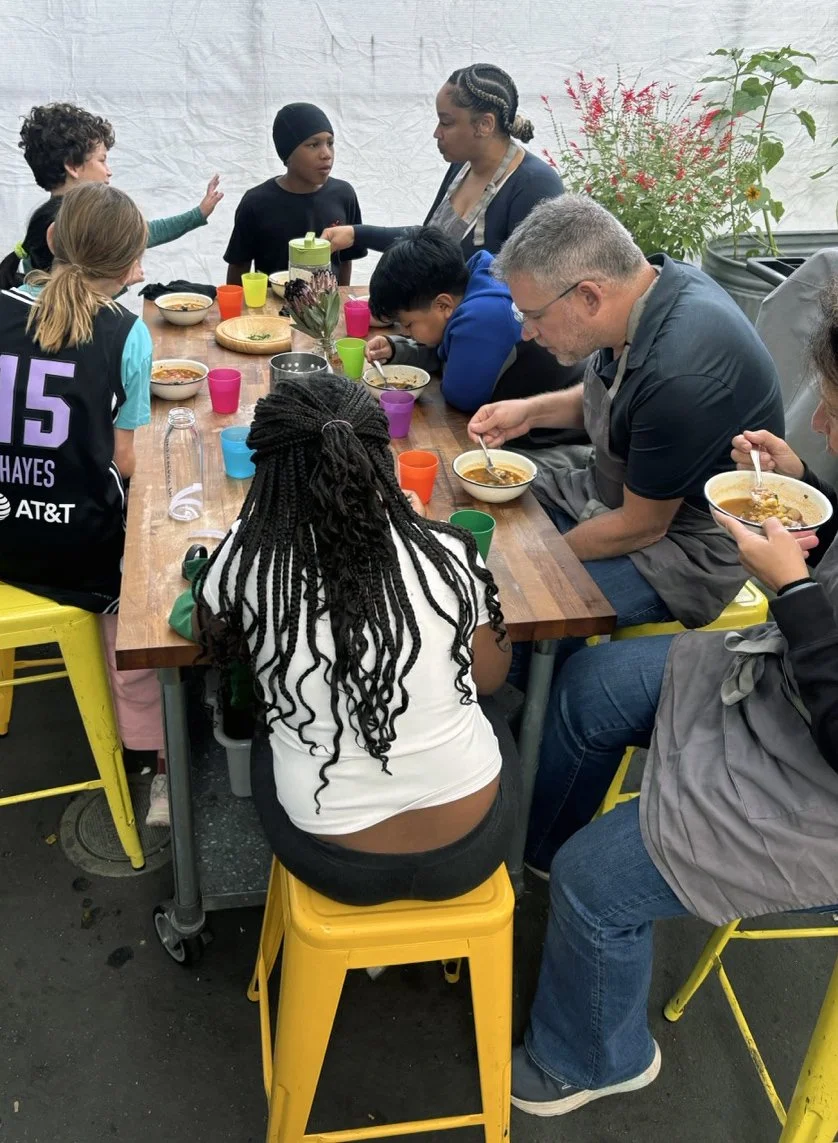
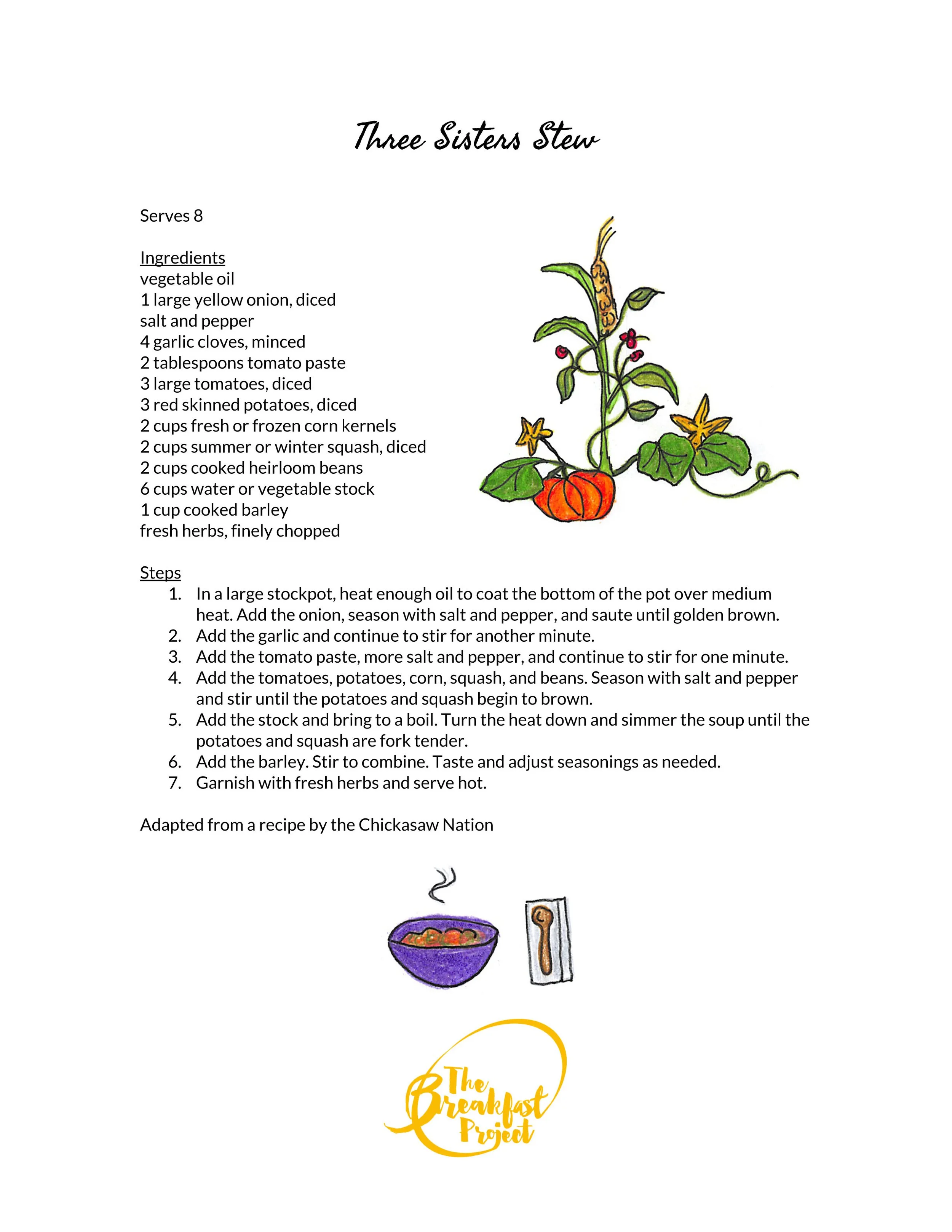
In the kitchen, we made a three sisters stew using a recipe from the Chickasaw Nation as our guide. We used frozen corn kernels as the Bay Area season for fresh corn just ended, both a summer squash called costata romanesco and a winter squash called butternut, and two types of beans: cranberry and Christmas lima. The warm stew was the perfect reminder that we are now entering a cooler, autumnal season.